

Share this
by Tee Dang Mankiewicz on Oct 13, 2026, 11:47:09 AM
Walk onto any factory floor, remote loading dock, construction site, or hospital ward, and you will notice a striking reality: the vast majority of the world’s work doesn’t happen behind a desk. According to McKinsey, deskless workers make up 80% of the global workforce, over 2.7 billion people across logistics, manufacturing, construction, healthcare, hospitality, and retail.
Yet despite their massive numbers, a persistent disparity remains in corporate technology investment. Historically, less than 1% of enterprise software venture funding has gone toward tools designed specifically for deskless employees. For decades, the software market has overwhelmingly prioritized the 20% who sit in office chairs, leaving the frontline equipped with hand-me-down tools designed for an entirely different operational environment.
This gap is typically evident in workforce training. Traditional Learning Management Systems (LMS) were architected around a specific set of assumptions: that every learner possesses a corporate email address, works on a company-issued laptop, has reliable high-speed internet, and can sit uninterrupted for an hour to complete a compliance module.
In the field, these corporate assumptions break down instantly:
- No Corporate Credentials: Most frontline workers do not have @company.com emails or single sign-on (SSO) logins.
- Device Disconnect: Desktop-first portals freeze or become unreadable on shared, lower-spec mobile devices.
- Connectivity Hurdles: Spotty Wi-Fi in remote job sites or metal-shielded warehouses cause sessions to time out midway through.
- Operational Friction: High turnover rates, diverse multilingual crews, and strict non-exempt overtime rules make mandatory, long-form training sessions logistically unviable.
When an LMS fails to deliver in the field, it creates a severe “delivery gap,” the operational lag between hiring a worker and getting them fully certified to step onto the floor. This delay comes with a direct business cost. A forklift driver or healthcare aide waiting days for a desktop portal to clear their safety certification represents a stalled operational unit.
Delayed deployment translates directly to reduced capacity and lost revenue. Worse still, pushing uncertified workers onto job sites to meet tight schedules opens organizations to catastrophic OSHA penalties, safety incidents, and regulatory non-compliance.
Training infrastructure is fundamentally part of your workforce infrastructure, and it directly dictates operational output. This guide evaluates ten of the best LMS platforms built for the actual realities of frontline work, evaluating how platforms like Brasstacks LMS and other top market contenders stack up in solving real-world deskless bottlenecks, ensuring 100% compliance, and driving immediate readiness.
How do I evaluate the best LMS for Frontline Workers?
Evaluating an LMS for deskless and blue-collar teams requires a fundamental shift in perspective. Features that matter in a corporate office, like complex multi-tiered learning pathways, comprehensive corporate leadership frameworks, or desktop authoring suites, take a backseat in the field.
To choose a platform that actually drives operational readiness, assess every tool against the following criteria tailored to the context of frontline work:
Mobile-First & Frictionless Access
If access requires an official email address, password resets through an internal IT helpdesk, or downloading a 200 MB desktop client, the platform will fail on day one. Frontline workers need “Frictionless Access” directly on their personal mobile devices (BYOD) or shared floor tablets. Look for a platform that offers:
- Alternative Login Methods: SMS text links, WhatsApp prompts, QR codes, or magic login links.
- Low-Bandwidth Optimization: Lightweight mobile architectures that load fast over 3G/4G networks or spotty facility Wi-Fi.
- Offline Caching: The ability for workers to complete modules underground, in remote field sites, or inside metal-shielded warehouses, with completion data auto-syncing once back online.
Bite-Sized Microlearning & Multilingual Capabilities
Expecting a deskless employee to sit through a 60-minute recorded webinar between shifts is unrealistic and counterproductive. Frontline learning must adapt to the physical contexts of the job.
- 5-Minute Training Lessons: Content must be delivered in short, highly focused modules (2 to 5 minutes long) that can be completed during shift handovers, pre-shift huddles, or quick breaks.
- Media-Rich Formats: Video clips, interactive visual flashcards, and simple quizzes drive far higher retention rates than dense walls of text.
- Native Multilingual Support: High-turnover frontline workforces are culturally diverse. An effective platform must support automated course translation across dozens of languages so workers absorb safety and operational protocols in their primary language.
Audit-Ready Compliance & Dynamic Certification Tracking
In regulated industries like logistics, manufacturing, healthcare, and construction, training isn’t just about skill development; it is a legal mandate. Failing to prove a worker completed their OSHA, HAZMAT, or Food Safety training before stepping onto the floor can result in massive fines or operational shutdowns.
- Automated Expiration Alerts: System-generated notifications (via SMS or push alerts) notifying workers and managers 30, 60, and 90 days before certifications expire.
- Instant Digital Certificates: Automated generation and storage of digital completion cards.
- Real-Time Audit Logs: A central dashboard that allows safety directors to export tamper-proof compliance records for regulatory inspections in seconds.
Automated, High-Volume Onboarding & Provisioning
Frontline employers frequently onboard workers in batches, ranging from 20 seasonal hires at a single warehouse to 500 contract workers across multiple job sites. Manually enrolling learners one by one creates a massive administrative barrier.
- Bulk Provisioning: The ability to import and enroll hundreds of workers via CSV or direct API triggers in minutes.
- Dynamic Smart Assignments: Rules-based enrollment that automatically assigns required safety and role-based training based on attributes like location, facility type, or employment status.
- Automated Reminders: Nudges sent automatically to incomplete profiles, keeping completion rates high without requiring HR managers to manually chase down individual employees.
Operational Stack Integration (HRIS, ATS, & Rostering)
Training that lives in a silo creates operational and learning friction. If your LMS doesn’t talk to your HRIS, Applicant Tracking System, or scheduling and dispatch software, you risk scheduling uncertified workers or paying idle wages to hires waiting for clearance.
- Bi-Directional Data Sync: Automatically trigger training assignments as soon as a candidate accepts a job offer.
- Readiness Status Sync: Feed completed compliance statuses directly into shift-scheduling and rostering tools so supervisors instantly know who is cleared for work on Day 1.
Quick Overview of the Best LMS Platforms for Frontline Workers
To help operations leaders, compliance officers, and HR directors quickly evaluate solutions, the table below highlights how the top 10 frontline LMS platforms compare across target audiences, key differentiators, access models, and core strengths:
|
Platform Name |
Best For |
Standout Frontline Feature |
Primary Access Method |
Core Operational Strength |
|
Brasstacks LMS |
High-volume, regulated frontline teams (Logistics, Mfg, Field Operations) |
Operational Readiness Engine (Links compliance directly to shift dispatch eligibility) |
SMS, WhatsApp, QR Codes & Magic Links |
Zero-friction onboarding & Day-1 worker clearance |
|
Firstwork |
High-volume worker activation & screening |
Embedded Pre-Boarding (Combines document verification & initial training) |
SMS Links & Mobile Web |
Rapid initial candidate-to-shift activation |
|
Axonify |
Large retail, grocery & warehousing workforces |
Adaptive Microlearning (3-minute daily brain-science reinforcement sessions) |
Mobile App (iOS / Android) |
Continuous knowledge retention & habit formation |
|
TalentCards |
Small-to-midsize field & site services |
Flashcard Deck Delivery (Ultra-simple bite-sized visual card sets) |
QR Codes, SMS & Mobile App |
Rapid deployment with zero IT setup |
|
Connecteam |
SMBs seeking an all-in-one deskless management tool |
Unified Operations Suite (Training embedded alongside scheduling & chat) |
Mobile App (iOS / Android) |
Consolidation of field operation point solutions |
|
EdApp (by SafetyCulture) |
Construction, manufacturing & site inspection safety |
Pre-Built Safety Library (Integrates directly with field inspection forms) |
QR Codes & Mobile App |
Field-ready safety compliance & site audits |
|
Docebo |
Large enterprises managing dual deskbound & deskless teams |
Enterprise AI & Offline Mode (Scalable platform with offline caching) |
Mobile App & SSO Web Portal |
Enterprise-wide multi-audience training governance |
|
Wisetail |
Hospitality, franchises & multi-unit retail |
Brand & Social Learning (Combines operational checklists with video feeds) |
Mobile App & Web |
Brand standards enforcement & culture building |
|
Opus |
Multi-unit restaurant & QSR workforces |
100+ Language Auto-Translate (Media-rich interactive chat modules) |
SMS & Mobile App |
Multilingual QSR crew training during shifts |
|
TalentLMS |
Growing mid-market teams bridging office & field work |
Flexible Course Builder (Supports standard SCORM & rapid authoring) |
Mobile App & Web Browser |
Versatile balance between corporate & field modules |
The Best 10 LMS Platforms for Frontline Workers
Selecting the right Learning Management System for deskless and blue-collar teams requires looking beyond generic software features to focus on real-world operational impact. While conventional platforms serve deskbound office workers, frontline environments demand tools built for high-volume onboarding, zero-friction mobile access, and strict compliance tracking.
This analysis evaluates the top ten LMS platforms designed specifically for frontline operations. We examine each platform’s core capabilities, ideal use cases, key differentiators, and operational trade-offs to help you select the ideal training solution for your remote workforce.
1. Brasstacks LMS (Editor’s Choice for the Best LMS for Frontline Workers)
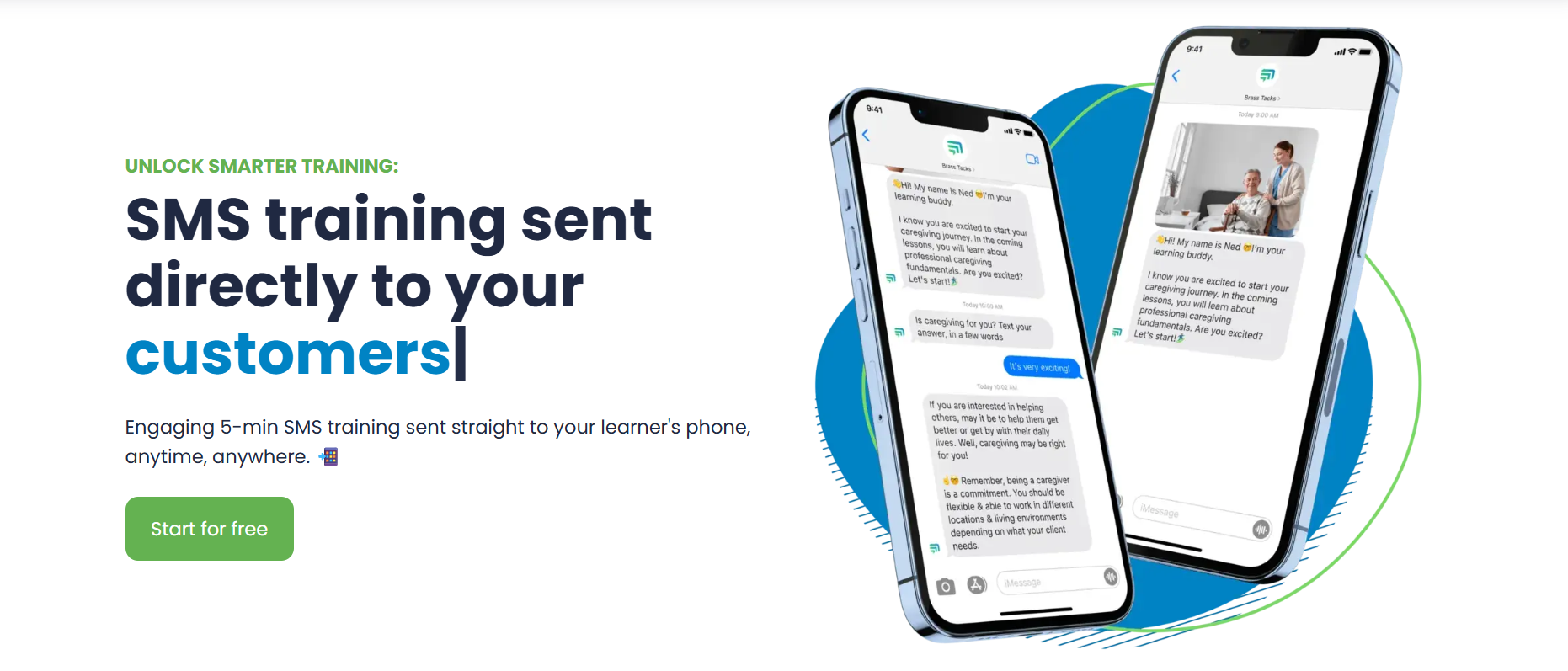
Brasstacks LMS is an operational-first and frictionless learning management system engineered specifically to eliminate the “delivery gap” in high-volume, highly regulated deskless environments. Unlike legacy corporate platforms built around HR administration, Brasstacks treats training completion as a real-time operational metric directly tied to worker dispatch and site clearance.
The platform’s core strength lies in its Operational Readiness Engine, which automatically bridges training data with scheduling software to restrict uncertified workers from being dispatched onto job sites. To ensure maximum participation in the field, Brasstacks eliminates password barriers by utilizing dynamic magic links sent via SMS, WhatsApp, or QR code scans.
It also features native offline mode caching for remote job sites, subterranean facilities, or metal-shielded warehouses, auto-syncing completion data once connectivity is restored. With an Audit-Ready Compliance Vault that sends automated expiration warnings 30, 60, and 90 days out, Brasstacks is the ideal choice for high-volume logistics, caregiving agencies and construction companies where Day-1 compliance clearance directly impacts operational output.
Organizations seeking long-form leadership development for office employees may prefer a secondary corporate tool, but for frontline operational execution, Brasstacks stands as an unparalleled LMS for frontline workers.

2. Firstwork
Firstwork is an AI-native workforce operations and activation platform designed specifically for high-turnover frontline industries. Rather than treating learning as an isolated post-hire step, Firstwork embeds compliance training directly into the initial candidate activation workflow.
By unifying document verification, ID checks, background screening, and mandatory safety inductions into a single mobile interface, it ensures that workers complete every required onboarding step before being marked Day-1 ready.
This tight integration makes it exceptionally valuable for high-volume staffing agencies, logistics hubs, and healthcare providers where speed-to-shift is a critical operational KPI. However, because it is heavily optimized for pre-boarding activation and compliance verification, organizations looking for a broad content-authoring suite or extended multi-year skills pathways for existing staff should assess whether a standalone LMS alongside Firstwork is necessary.
3. Axonify
Axonify is a mobile microlearning platform built to drive continuous knowledge retention and habit reinforcement in high-turnover frontline environments like retail, grocery, and warehousing. Grounded in brain science and spaced repetition, Axonify delivers short, 3-minute training bursts directly into the daily flow of a worker’s shift.
Its adaptive engine constantly evaluates individual performance, tailoring daily questions to target specific knowledge gaps without requiring dedicated off-floor training time. While Axonify excels at keeping distributed workforces consistently informed, compliant, and safety-conscious over the long term, employers whose primary bottleneck is upfront compliance certification during initial onboarding should evaluate its pre-hire documentation capabilities carefully.
4. Talent Cards
TalentCards approaches deskless training through extreme simplicity, delivering bite-sized learning content through a visually engaging, card-based flashcard format. Built for workers who lack corporate email addresses, laptops, or formal training hours. It allows managers to construct short card decks that employees access instantly on their personal smartphones via QR codes or SMS links.
The complete removal of enrollment friction allows small to mid-sized field service, hospitality, and construction teams to deploy basic procedural guides and safety protocols in minutes without IT intervention. That said, because TalentCards prioritizes ease of content creation and rapid consumption, organizations requiring multi-step compliance certification, deep HRIS integrations, or advanced enterprise audit reporting may find its feature set too streamlined for complex regulatory needs.
5. Connecteam
Connecteam is an all-in-one workforce management platform that embeds learning capabilities directly alongside daily operational tools such as shift scheduling, time tracking, task management, and team communications.
It is designed primarily for small to mid-sized deskless businesses in the caregiving and security industries. It reduces context-switching by allowing employees to complete assigned courses in the same mobile application they use to view their shift roster or clock in for work.
While this consolidation creates a seamless user experience for field crews and reduces gap fatigue, Connecteam’s learning module is part of a broader suite. Consequently, enterprise teams requiring deep compliance automation, advanced authoring capabilities, or dedicated regulatory audit trails may find dedicated LMS tools more suitable.
6. EdApp (Now Mitti)
EdApp (Now Mitti) is a mobile-first microlearning platform purpose-built for safety-critical frontline operations including manufacturing, mining, construction, and site management. Now integrated into SafetyCulture’s operational ecosystem, EdApp allows companies to link digital training modules directly to real-world safety inspection checklists and incident reports.
The platform features a vast library of pre-built, editable safety courses that allow safety officers to deploy regulatory training in minutes. With a free tier that makes it instantly accessible for rapid field deployment, EdApp is an outstanding choice for risk-heavy environments. However, organizations whose training requirements extend heavily beyond safety protocols into complex HRIS-integrated onboarding flows should evaluate the setup required for deep workforce integration.
7. Docebo
Docebo is an enterprise-grade AI learning platform built to manage complex, large-scale training programs across both deskbound corporate employees and distributed frontline workforces. Used widely across global logistics, healthcare, and retail, Docebo offers strong mobile accessibility, offline content caching, and AI-powered content recommendations tailored to individual job roles.
It allows large enterprises to maintain a single learning governance system that covers formal certifications, social learning, and on-the-job training. Nevertheless, Docebo’s enterprise scale brings significant implementation complexity, higher deployment costs, and an administrative interface that can feel too heavy for agile blue-collar teams seeking rapid, zero-friction activation.
8. Wisetail
Wisetail is a learning and operations platform that combines formal course delivery with operational checklists and social community features. Tailored primarily to multi-unit retail, restaurant franchises, and hospitality brands, Wisetail focuses on enforcing brand consistency and operational standards across geographically dispersed locations.
Employees interact with video-based service standards, daily operational checklists, and engaging team feeds directly from their mobile devices. While Wisetall is unparalleled in building workplace culture and aligning franchise operations, its configuration, custom branding setup, and deployment timeline are typically longer compared to lightweight, plug-and-play mobile training apps.
9. Opus
Opus is a mobile-first training platform engineered specifically for the fast-paced, high-turnover environment of multi-unit restaurants and quick-service restaurant (QSR) chains. Recognizing the extreme linguistic diversity of kitchen and service staff, Opus features built-in automatic translation across more than 100 languages alongside highly visual, media-rich micro-lessons delivered via text-like chat interfaces.
This allows non-native speakers to master station prep, food safety protocols, and guest service standards during short shift windows. Because Opus is hyper-focused on hospitality workflows, heavy industrial employers with complex OSHA, HAZMAT, or technical equipment certification requirements may find its feature set less aligned with industrial compliance tracking.
10. TalentLMS
TalentLMS is a highly adaptable learning management system that provides a balance between traditional web-based course authoring and mobile delivery. Ideal for growing mid-market companies that need to train both office employees and field personnel, TalentLMS supports standard SCORM and xAPI course packages, gamification features, and rapid content assembly.
It offers an accessible pricing model and straightforward administration, making it a reliable choice for organizations bridging office and field work. However, because it was originally designed as a general-purpose LMS, content creators must take care to design specifically for small screens to prevent desktop layouts from causing navigation friction on mobile devices.
Industry-Specific Use Cases & Implementation Playbooks
Implementing an operational LMS requires tailoring training workflows to the physical realities, safety demands, and compliance mandates of each distinct industry. Below is how leading frontline organizations leverage an operational platform like Brasstacks LMS to solve their specific field challenges.
Logistics & Warehousing: Peak-Season Rapid Activation
During peak seasonal spikes (Q4 retail rushes, prime fulfillment surges), logistics operations must onboard hundreds of warehouse associates and forklift operators weekly. Waiting days for desktop safety inductions stall facility throughput and inflate time-to-first-shift costs.
The Brasstacks LMS Playbook:
- Candidates receive an SMS magic link upon accepting their offer.
- They complete a 15-minute mobile safety induction on their personal phone before setting foot in the facility.
- Brasstacks’ Operational Readiness Engine automatically updates the site’s shift-dispatch software, marking the worker “Cleared for Floor” instantly.
Manufacturing Industry: Lockout/Tagout & Offline Safety Compliance
Manufacturing plants and heavy industrial facilities face rigorous OSHA, Lockout/Tagout (LOTO), and hazardous materials (HAZMAT) regulations. Training must occur directly on the factory floor or in metal-shielded zones where cellular signal is spotty or non-existent.
The Brasstacks Playbook:
- Floor supervisors distribute ruggedized site tablets pre-loaded with Brasstacks’ offline mode.
- Workers complete interactive 3-minute equipment safety refreshers and digitally sign safety waivers directly on the tablet.
- Once the tablet connects to local Wi-Fi, completion records and digital signatures automatically sync to the central Audit-Ready Compliance vault.
Healthcare & Home Health Services: Continuous Recertification Management
Distributed home health aides, nursing assistants, and field care clinicians must maintain continuous compliance across HIPAA, CPR, bloodborne pathogens, and state licensing standards. Tracking expiring credentials manually across thousands of remote care providers leads to audit gaps and illegal shift assignments.
The Brasstacks Playbook:
- Brasstacks monitors license and certification expiration dates in real time.
- Automated push and SMS alerts trigger 60, 30, and 7 days before expiration with direct links to mandatory renewal modules.
- Caregivers complete micro-refresher courses on their phones between patient visits, ensuring zero lapse in compliance or patient care continuity.
Retail & Hospitality: Consistent Brand Standards & High Turnover Onboarding
Multi-unit restaurant chains, QSRs, and retail stores experience 100%+ annual turnover and diverse, non-desk workforces. Training new hires on menu changes, customer service standards, and POS operations using long-form manuals leads to inconsistent guest experiences.
The Brasstacks Playbook:
- Managers deploy short, video-based micro-learning decks covering new seasonal products, upselling techniques, and hygiene protocols directly via QR codes posted in employee breakrooms.
- Staff complete 2-minute visual quizzes during pre-shift huddles.
- Location managers track completion leaderboards on an operational dashboard, ensuring 100% team alignment before peak shift hours.
How to Calculate the ROI of a Frontline Training LMS?

Investing in a frontline LMS is not an administrative cost center; it is a direct operational multiplier. To build a compelling business case for executive leadership, operations directors must translate training metrics into financial performance. Measuring the return on investment (ROI) of a frontline platform like Brasstacks LMS comes down to four core operational metrics:
Time-to-Productivity (Time-to-First Shift)
The Metric: Days elapsed between extending a job offer and the worker completing their first billable, compliant shift. It can be calculated by multiplying the DaysSaved by Daily Revenue Output per worker.
The Impact: Traditional desktop onboarding delays worker activation by 3 to 7 days due to credential setup and scheduling backlogs. By delivering mobile pre-boarding via SMS magic links, platforms like Brasstacks LMS collapse time-to-first-shift down to under 24 hours, turning idle candidates into productive assets immediately.
90-Day Turnover & Retention Rates
The Metric: Percentage of new hires who remain employed past the critical 90-day mark. It can be calculated through the reduction in Churn Count multiplied by the cost to replace a frontline worker. It is typically $4000 to $7000 per worker in the logistics and manufacturing industry.
The Impact: Confusing, paper-heavy, or non-existent onboarding is a primary driver of early frontline churn. Clear, mobile-friendly microlearning gives worker confidence on Day 1, dramatically reducing early drop-offs and lowering re-hiring expenses.
Reduction in Workplace Incidents & OSHA Penalties
The Metric: Year-over-year drop in safety violations, workers’ compensation claims, and regulatory fines. It can be calculated by subtracting the Historical Annual Safety Fine Total from the Post to identify total implementation fines.
The Impact: In 2026, serious OSHA violations carry fines exceeding $16,000 per instance, with willful violations topping $160,000. Automated compliance gating ensures that zero uncertified or improperly trained workers step onto a high-risk shop floor, insulating the organization from catastrophic financial penalties.
Administrative Hours Saved
The Metric: Hours spent by HR coordinators, safety managers, and floor supervisors manually chasing training completion, managing spreadsheets, and filing paper certificates.
The Impact: Automated provisioning, smart enrollment rules, and part-time audit logging eliminate thousands of manual administrative hours per year, freeing operations staff to focus on productivity rather than paperwork.
Frequently Asked Questions (FAQs)
What is the difference between a traditional and a frontline LMS?
A traditional LMS is designed for desk-bound knowledge workers who have company email addresses, desktop computers, and a dedicated time for long-form courses. A frontline LMS is engineered specifically for deskless, blue-collar, and mobile workforces. It prioritizes mobile-first delivery, frictionless access without corporate credentials, bite-sized microlearning, offline capabilities, and automated compliance tracking that links directly to shift readiness.
How do frontline workers access an LMS without a corporate email address?
Modern frontline LMS platforms like Brasstacks LMS eliminate password and email barriers entirely. Workers access their required training modules on personal or shared mobile devices using secure alternative authentication methods, including SMS text links, WhatsApp prompts, QR code scans, or single-use magic links. This allows instant access on Day 1 without requiring IT provisioning or corporate email accounts.
Can frontline training be completed offline in areas with poor cellular service?
Yes. Purpose-built frontline LMS solutions offer native offline mode caching. Workers can download short microlearning modules or safety refreshers onto mobile devices or ruggedized field tablets, complete their training in offline environments such as underground mines, remote job sites, or metal-shielded warehouses, and have their completion data and digital signatures auto-sync to the central compliance portal once a network connection is restored.
How does a frontline LMS help maintain OSHA and regulatory compliance?
A frontline LMS automates compliance tracking by generating dynamic, audit-ready digital records for every worker. It tracks mandatory certifications, issues automated renewal reminders to workers and supervisors 30, 60, and 90 days before expiration, and can restrict uncertified employees from shift dispatch. In the event of an inspection, safety officers can export tamper-proof compliance logs instantly.
How short should frontline microlearning modules be for maximum engagement?
Frontline microlearning modules should be between 2 to 5 minutes long. Because deskless employees complete training during pre-shift huddles, shift handovers, or brief breaks, concise media-rich modules yield significantly higher completion rates and knowledge retention compared to traditional 30-to-60 minute desktop courses.
Conclusion
The frontline workers are the operational backbone of the economic landscape, yet for years, traditional enterprise software has forced deskless workers to rely on tools designed for corporate offices. As logistics, manufacturing, healthcare, and retail operations experience tighter margins, stricter regulatory scrutiny, and high labor turnover, the delivery gap between hiring a worker and certifying them for the floor can no longer be ignored.
Choosing the right LMS for frontline workers comes down to a fundamental operational reality: the best learning platform isn’t the one with the most corporate administrative features; it’s the one your workers will actually complete on the floor. While platforms like Axonify excel at ongoing daily microlearning reinforcement and EdApp offers strong safety inspection tie-ins, Brasstacks LMS stands out as the editor’s top choice for high-volume, highly regulated frontline workforces.
By treating compliance completion as a real-time prerequisite for shift eligibility, eliminating password friction with magic links, and guaranteeing 100% audit-ready records, Brasstacks transforms workforce training from a slow compliance bottleneck into a competitive operational advantage.
Ready to Eliminate the Frontline Delivery Gap? Stop letting delayed safety certifications and clunky corporate portals stall your operational outputs. Sign up for a personalized Brasstacks LMS demo today, and see how you can achieve 100% Day-1 worker clearance across your entire deskless workforce.