

Share this
by Tee Dang Mankiewicz on Jan 26, 2026, 11:56:11 AM
Compliance training has become an impactful tool that makes people safe, companies secure, and confidence is established in the workplace. Most L&D leaders today declare that effective compliance training enhances trust and it assists teams to stay compliant in a meaningful way. The 2026 decision about the appropriate LMS to rely on in the sphere of compliance training will determine the extent to which your employees are prepared and confident in their daily work.
Effective compliance training would also make the employees feel assisted, rather than coerced. When individuals are aware of rules and expectations, they make sounder decisions and are less afraid at work. It has been proven that organizations that have carefully designed compliance training programs significantly minimize risks and policy breaches at the workplace and enhance employee confidence and responsibility.
What is Compliance Training?
Compliance training is the process of educating employees about the laws, regulations, internal policies, and workplace standards they must follow in their roles. It helps organizations reduce risk, maintain consistent behavior, and ensure that employees understand their responsibilities in areas such as safety, privacy, ethics, harassment prevention, and data protection.
Unlike general learning programs, compliance training is usually mandatory and time-sensitive. If often needs to be completed on a schedule, repeated regularly, and documented carefully so the organization can prove that required training took place.
A well-structured compliance training program does more than check a box. It helps teams make better decisions, avoid costly mistakes, and stay prepared for audits, inspections, and policy reviews.
What is the Importance of Compliance Training in 2026?
The expectation of compliance is increasing, and traditional training methods are no longer sufficient. New legislation, changing work teams, and global operations have made compliance more intricate than ever. Any failure to follow policies can lead to penalties, loss of trust, and increased stress among employees who are unclear about the rules they need to follow.
The latest findings in the L&D industry indicate that 68 percent of organizations were grappling with compliance, as their training systems were not keeping up with the changes, and 42 percent of the employees reported that compliance training was confusing or difficult to follow.
Such loopholes pose risk and diminish inter-team confidence. It is the increasing pressure that is making organizations resort to a compliance training LMS. A modern system maintains training concise, current, and consistent so that employees remain assured as the leaders remain auditable and agile.

Quick summary: Best LMS for Compliance Training
In 2026, the best LMS for compliance training combines automated assignments, audit-ready reporting, and mobile-first learning so teams can stay compliant without drowning in admin. The right platform depends on your size, regulatory complexity, and whether you’re training desk-based, deskless, or mixed teams. The following guide highlights the top 10 LMS platforms for compliance and hen each one is the best fit.
Top Compliance LMSs at a Glance
|
LMS |
Best for |
Key compliance strengths |
|
Brasstacks |
Frontline and caregiving teams need SMS-based microlearning |
Zero-friction SMS delivery, AI-powered course authoring from policies, automated recertification, and audit-ready dashboards. |
|
TalentLMS |
SMBs that want plug-and-play compliance courses |
Large catalog of ready-made compliance content, certification tracking, and automated reminders. |
|
D2L Brightspace |
Highly regulated enterprises and education-healthcare hybrids |
Robust compliance workflows, policy acknowledgment tracking, and advanced reporting. |
|
SAP Litmos |
Global enterprises with complex, multi-region compliance needs |
Extensive content library, strong integration ecosystem, scalable automation. |
|
Moodle Workplace |
Organizations with strong IT support want full control |
Flexible, open-source stack, custom certification paths, multi-tenant support. |
|
Absorb LMS |
Mid-sized organizations focused on analytics and automation |
AI-driven reporting, configurable compliance dashboards, flexible assignments. |
|
iSpring Learn |
Teams that need fast conversion of existing content |
PowerPoint-to-course workflows, scenario-based modules, and compliance certificates. |
|
Cornerstone LMS |
HR-led enterprises aligning compliance with talent management |
Deep HR integrations, performance, and compliance tracking in one system. |
|
Docebo |
Automation-first enterprises want AI-powered learning |
AI recommendations, automated enrollments, scalable multi-audience delivery. |
|
LearnUpon |
SMBs and training providers managing multiple audiences |
Simple admin UX, multi-tenant portals, certification and renewal tracking. |
Key Takeaways
- The best compliance LMS should automate enrollments, reminders, and recertifications while keeping audit trails and reports ready for auditors at any time.
- Frontline and caregiving teams benefit most from mobile-first or SMS-based microlearning platforms like Brasstacks that remove logins and app friction.
- Traditional LMS platforms like SAP Litmos, Cornerstone, and D2L Brightspace work well for large enterprises that need deep integrations and structured workflows.
- Small or medium-sized organizations often prefer Brasstacks LMS, TalentLMS, LearnUpon, or iSpring for their combination of ready-made compliance content and simpler administration.
What are the Key Features of the Best LMS for Compliance Training?
Not all learning platforms are designed to address compliance requirements effectively. The optimal LMS to use in compliance training in 2026 should lower the complexity, promote accuracy, and instill confidence in both employees and leadership. All of the following characteristics are essential for a future-ready compliance training system:
Smart Training Assignment
A strong LMS for compliance training removes guesswork by assigning courses automatically based on employee role, department, location, or regulatory requirements. This ensures no one is overlooked and helps organizations stay compliant even as teams grow, roles change, or new rules are introduced.
Real-time Tracking and Reporting
Clear reporting will enable leaders to be informed without manual checks. Dashboards that are easy to use give real-time access to:
- Training completion progress
- Overdue or pending courses
- Certification history and renewal timelines
This real-time clarity supports quicker decisions and stronger compliance oversight across departments.
Audit-Ready Records
When records are well organized, preparing audits would be much less stressful. A reliable compliance training LMS safely archives all training information such as completion dates, recertification deadlines, and user activity, which can be presented at any time it is needed.
Straightforward and Intuitive Learning Experience
The system should be intuitive to ensure employees are willing to undergo training. A well-structured and user-intuitive interface will make it less frustrating, save time, and enable the employees to concentrate on the understanding of the policies rather than on the process of mastering the platform. Systems that are user-friendly will enhance completion rates significantly.
Automated Reminders and Alerts
Employees are reminded of a deadline in an automated manner without the need to be pursued all the time. Early notifications serve to avoid training errors as well as save on the part of HR and compliance departments.
Centralized Policy Management
When every policy, update, and learning material is contained in a single learning platform, confusion is eliminated. The employees will never be left with any doubts about where to get the latest instructions, and the leaders are sure that the old policies are not applicable.
Flexible Learning Formats
An online learning system favors multiple styles of learning. The compliance training can be implemented through videos, brief lessons, quizzes, and recognition-based learning to enable the employees to complete the training in bits without interfering with their daily work.
Role-Based Permissions and Accessibility
Role-based permissions are effective in ensuring control and security. Administrators control the settings of the system, managers can monitor the progress of the team, employees concentrate on learning, and sensitive information is not lost at any level.
Scalable Organizational Growth
The compliance requirements increase as the organization expands. The most appropriate LMS to be used in compliance training can be easily scaled to accommodate new users, departments, and regulations without any additional administrative overhead or strain on the system.
Consistent Training Experience
Consistency builds trust and accountability. When every employee receives the same structured and up-to-date training, misunderstandings are reduced, and a shared understanding of compliance expectations is created across the company.
Why does compliance training matter in 2026?
Regulatory change is impacting global industries: companies face more frequent updates and heavier penalties, so compliance training is now a core risk–management tool that prevents costly fines and operational shutdowns. Effective programs reduce incident rates by ensuring staff know current rules and can act correctly under pressure, which lowers insurance claims and avoids reputational damage.
Trust is a competitive advantage: customers, partners, and regulators expect demonstrable competence, and consistent training signals reliability and ethical operations. Audit-readiness has moved from occasional preparation to continuous proof; organizations need real-time evidence that employees completed required courses, clear assessments, and had gaps remediated before inspections arrive.
Technology makes that possible through automated certification tracking, timestamped activity logs, and exportable audit reports that compress weeks of manual work into minutes. Lastly, modern learners demand short, contextual learning delivered on mobile devices and embedded in workflows: meeting that expectation increases completion rates and turns compliance from a chore into effective behavior change.
Nowadays, organizations that treat compliance training as a strategic system reduce risk, build trust, and stay audit-ready.
Who needs an LMS for Compliance Training?
Compliance training affects every part of an organization, but the decision to invest in the right LMS usually comes down to a few key roles. Each group faces different challenges, yet they all share a similar goal: making sure training is completed on time and nothing slips through the cracks.
HR Leaders
HR teams are often responsible for policies, training schedules, onboarding, and audit documentation. Without the right system, tracking completion can become time-consuming and error-prone. A compliance training LMS replaces manual follow-ups with clear visibility, organized workflows, and automated reminders.
Compliance Officers
Compliance officers need accuracy, consistency, and complete documentation. They must be confident that the required courses have been completed and properly recorded. A compliance training LMS helps by providing automated reports, reminders, and audit-ready logs that make it easier to stay prepared for inspections and reviews.
IT Managers
IT teams focus on more than training content. They are concerned with data security, system integrations, user access, and platform reliability. A strong compliance training LMS should integrate smoothly with existing tools, protect sensitive information, and meet high security standards.
Executives and Leadership Teams
Executives are focused on time, reputation, and long-term stability. They need confidence that compliance gaps will not expose the organization to legal, financial, or operational damage. A reliable LMS gives leadership better oversight and helps ensure training obligations are met across the business.
In summary, a compliance training LMS is not just useful for one functional department; it supports the entire organization by reducing risk, improving accountability, and keeping training on track.
What are the benefits of a Compliance Training LMS?
A compliance training LMS is not just a platform to install courses. It establishes a dependable framework that enables organizations to remain steady, assists employees in knowing what is expected, and also assures leaders that compliance is being managed in the right way. The following are the benefits of compliance training LMS:
Lower Compliance Risk: A compliance training LMS can be used to ensure that no training can be skipped because the tasks and deadlines are all automated and no one can forget about them. This decreases the chances of breaches, sanctions, and lawsuits that may occur as a result of undergoing incomplete or old training.
Reduced Administrative Work: Manual tracking is generally subject to error and delays. LMS takes care of enrollments, reminders, and reports automatically, which means that HR and compliance teams can work on individuals and policies rather than spreadsheets.
Stronger Audit Readiness: Evidence is important during audits. The completion records, timestamps, and certifications are stored in a single platform and are easily accessed through a compliance training LMS, unlike when they are stored separately, which makes it easy to respond to audit requests in a quick and confident manner.
Higher Employee Confidence: Employees know what is expected of them when the content in the training is easy to understand and follow. This transparency makes them responsible at the workplace and less uncertain in dealing with delicate cases.
Consistent Training Across Teams: Fairness and accountability require consistency. An LMS can provide all employees with a similar training experience, no matter their position or location, to create a standardized team with company standards.
Better Training Completion Rates: The ease of navigation, brief learning modules, and the display of progress motivate employees to attend training within the stipulated time. Participation comes in naturally when learning is manageable.
Clear Visibility for Leaders: Leaders get a clear picture of the compliance level within the departments. Real-time insights assist them in detecting gaps at an early stage and acting before things can go wrong.
Faster Policy Updates: Policies and regulations are dynamic. An LMS allows sharing updates in real-time, and the employees will read the most current information.
Scales with Organizational Growth: The larger the organization, the more the compliance requirements. A scalable LMS can readily accommodate new users, teams, and regulations without complicating it.
Improved Workplace Trust: Trust is established through transparent and consistent compliance training. Employees are motivated to think they are supported, and the leadership has a feeling that they are being heard and adhered to.
An effective compliance training LMS transforms mandatory learning into a reliable process that enhances accountability, lowers stress, and fosters long-term organizational stability.
What to look for in compliance training software?
There are many compliance training LMSs available in the marketplace. Therefore, you must look for the following features to make an informed decision:
Audit Trail Quality
If an auditor walked in tomorrow and asked for timestamped proof that every employee completed required training over the past three years, could your current system produce that in a clean format? A high-quality compliance training LMS helps in providing robust exportable records.
Automated Compliance Training Workflows
The most common compliance failure is administrative: someone’s certification expired and nobody was informed about it. A platform that automatically re-enrolls employees before credentials lapse, notifies managers about upcoming deadlines, and escalates overdue completions eliminates the class of failures that come from manual tracking. The following automation is more valuable than a large content library for most organizations.
Align your Compliance Training Platform to your Regulatory Environment
General LMS platforms handle compliance training well when the requirement is general, such as workplace safety basics, harassment prevention, or GDPR awareness. When your compliance requirements are industry-specific such as clinical competencies in Healthcare, NFPA standards in fire services, or FCA obligations in UK financial services, purpose-built platforms with that content expertise are worth the premium.
Check what xAPI actually Enables
xAPI is frequently listed as a feature without explaining what it adds. What xAPI enables is tracking compliance-related activity beyond formal e-learning: on-the-job assessments, simulations, blended learning programs. For organizations where compliance involves demonstrated competency (not just course completion). xAPI support with a Learning Record Store (LRS) matters. For organizations that only need to track online course completions, SCORM alone is sufficient.
Understand the Content Maintenance Model
Regulations change. Does your platform update its off-the-shelf compliance content automatically, or does content maintenance fall on your team? Platforms with managed content libraries relieve this burden.
Platforms that give you authoring tools but not managed content give you more control but require internal investment to maintain currency.
How to Select the Best LMS for Compliance Training?
Selecting the best LMS for compliance training requires careful evaluation of several critical factors that directly impact training effectiveness and regulatory adherence. Organizations must assess platforms based on specific compliance needs rather than regular feature lists to ensure the solution delivers measurable value and risk reduction.
Usability and Learner Engagement
A compliance LMS must offer an intuitive, user-friendly interface that simplifies navigation for both administrators and learners. Complex systems mitigate adoption rates and increase support costs, undermining training initiatives.
Look for platforms with a mobile-responsive design, allowing employees to complete training on any device, especially critical for remote or frontline workers. Engagement features like gamification, microlearning, and interactive content keep learners motivated and improve knowledge retention, which is essential for dense or repetitive compliance topics.
Scalability Across Enterprises
Your chosen LMS must accommodate organizational growth without performance degradation. For enterprises, this means supporting thousands of learners across multiple regions with complex organizational hierarchies.
For small and medium businesses, scalability involves cost-effective expansion as headcount increases. Evaluate whether the platform can handle increased user loads, additional content, and expanded functionality without requiring costly migrations or system overhauls. Cloud-based solutions typically offer better scalability and automatic updates, reducing IT maintenance costs.
Course Catalog and Customization
Pre-built compliance course libraries accelerate deployment, especially for common regulations like OSHA, HIPAA, or GDPR. However, every organization has unique policies requiring custom content creation.
The ideal LMS should provide AI course authoring tools that allow you to build, import, and modify courses. Support for SCORM, xAPI, and other standards ensures content interoperability and future-proofs your training investment. Customization capabilities should extend to branding, learning paths, and assessment formats to align training with specific organizational requirements.
Compliance-Focused Features
The platform must offer specialized compliance features beyond standard LMS functionality. Automated certification tracking with renewal reminders prevents lapses that could result in regulatory violations. Audit-ready reporting generates detailed compliance reports on demand, demonstrating training completion to regulators and auditors.
Look for features like electronic signatures, version control for policy documents, and automated workflows that enforce training deadlines. These tools transform compliance from an administrative task into a proactive, automated process.
Pricing and Customer Support
Transparent pricing models without hidden fees are essential for budget planning. Evaluate the total cost of ownership, including implementation, training, and ongoing support. While cost matters, prioritize value and ROI over the lowest price. A robust compliance LMS can save thousands of dollars annually by preventing fines and reducing administrative overhead.
Equally important is vendor support quality, including response times, availability of dedicated account managers, and comprehensive training resources. Strong support ensures seamless implementation and minimizes disruptions during critical compliance audits.

How LMS Compliance Training Improves Engagement
Compliance training does not have to feel heavy or tiring. Modern LMS compliance training platforms are built to keep employees interested, even when learning is mandatory. By dividing content into short, focused lessons, employees can learn at a steady pace without feeling overloaded or rushed.
Engagement grows when training connects to real workplace situations. Practical examples, quick knowledge checks, and clear progress indicators help employees see how rules apply to their daily tasks. Research shows that organizations that updated their compliance programs using LMS tools improved training completion rates by 37%, showing that well-designed learning keeps people involved.
Modern LMS platforms also give employees a sense of progress and achievement. Seeing completed lessons, upcoming tasks, and clear milestones encourages learners to stay motivated and finish training on time.
When compliance training feels relevant, structured, and easy to complete, employees pay more attention, follow guidelines with confidence, and take greater ownership of doing the right thing at work.
The Best LMS for Compliance Training
After extensive evaluation based on automation capabilities, AI course authoring, compliance-specific features, user experience, and scalability, we’ve identified the top 10 LMS platforms for compliance training. Each platform brings significant strengths to compliance management, from AI-powered automation and pre-built course libraries to robust certification tracking and audit-ready reporting.
Whether you’re a small business seeking straightforward compliance solutions or a global enterprise managing complex regulatory requirements across multiple jurisdictions, this comprehensive analysis covers learning management systems suited for every organizational size and industry.
The following review examines key features, ideal use cases, pricing considerations, and compliance-focused capabilities to help you select the LMS that best aligns with your regulatory requirements and training objectives.
Brasstacks - The Best LMS for Compliance Training
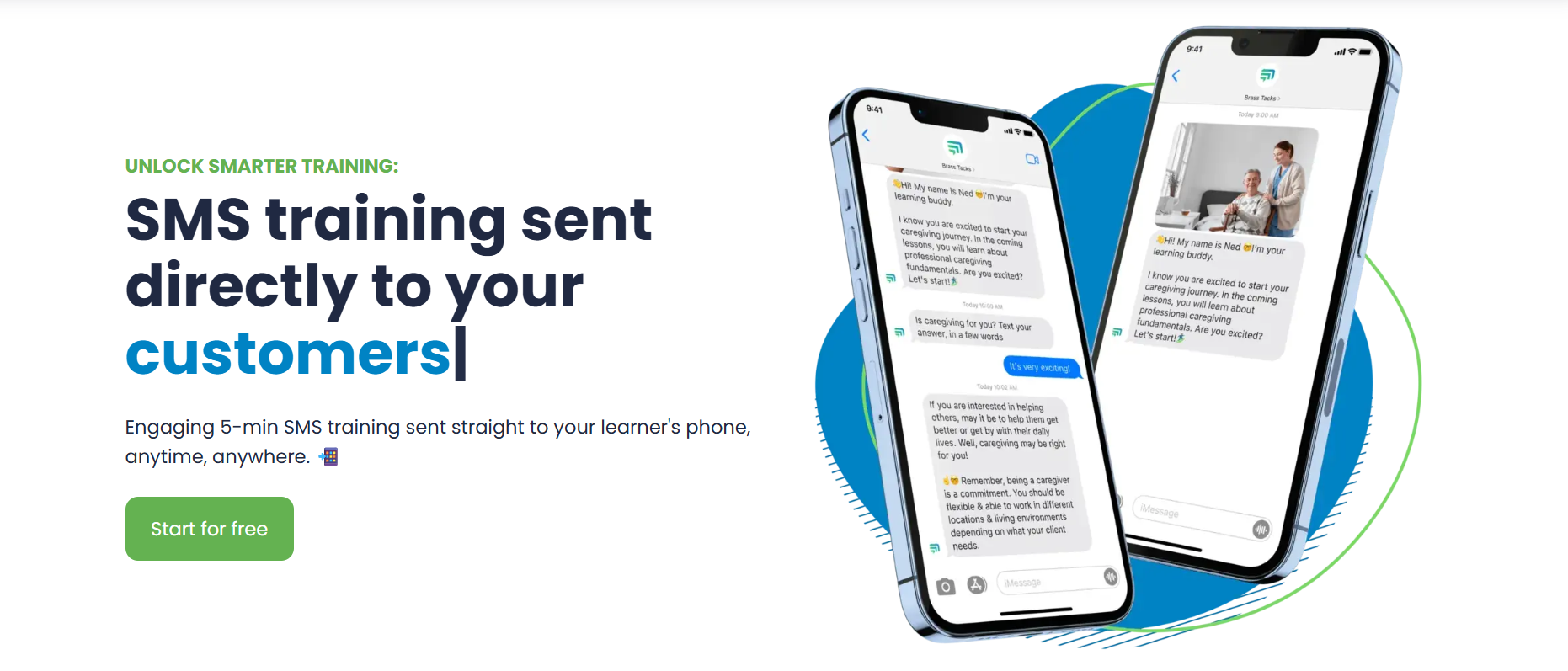
Brasstacks specializes in microlearning-based compliance training with SMS delivery and mobile-first design, making it ideal for caregiving agencies, healthcare organizations, and businesses with frontline workers. The platform features AI-powered course builders that rapidly convert compliance materials into bite-sized lessons, advanced analytics for tracking completion rates, and customizable learning paths tailored to specific employee roles.
It excels in delivering HIPAA, OSHA, and state-specific regulatory training through engaging, short-form content that improves retention. Its automated enrollment system assigns training based on job roles, while certification tracking ensures timely renewals.
The platform integrates seamlessly with HR systems and offers multilingual support for diverse and remote workforces. It is best suited for organizations requiring fast deployment, high engagement rates, and mobile accessibility for distributed teams.

TalentLMS
TalentLMS delivers cloud-based compliance training with exceptional ease of use and rapid deployment capabilities. The platform offers automated reminders that notify employees of upcoming deadlines, in-depth compliance reporting for audit readiness, and intuitive course creation tools. Its drag-and-drop interface enables non-technical administrators to build and customize compliance courses quickly.
It supports SCORM and xAPI standards, enabling content interoperability, while its mobile app ensures learning accessibility across devices. The platform provides role-based access controls, automated certification issuance, and renewal tracking. It offers flexible pricing models and strong integration capabilities with HRIS and business systems.
It is recommended for small to mid-sized enterprises seeking cost-effective solutions. Its AI-powered features offer personalized learning recommendations and automated tracking, making it ideal for organizations prioritizing user-friendliness and efficient compliance management.
D2L Brightspace
D2L Brightspace stands out as an enterprise-grade solution designed for organizations with complex, multi-jurisdictional compliance requirements and remote teams. The platform excels in configurability, offering role-based enrollment that automatically assigns training based on job function, location, or department. Its certification tracking system monitors expirations and automates recertification reminders, while real-time audit-ready reporting generates exportable compliance records instantly.
Content version control ensures employees always access current materials, and policy acknowledgement features collect and log legally binding sign-offs. Brightspace supports multilingual content delivery with responsive mobile access, making it perfect for global organizations.
HRIS integration syncs learner data seamlessly, and AI automation triggers intelligent reminders and follow-ups. The platform scales effortlessly across departments, languages, and geographies while maintaining complete visibility and control, making it ideal for highly regulated industries.
SAP Litmos
SAP Litmos combines quick deployment with a comprehensive library of over 3,000 prebuilt compliance courses covering GDPR, workplace safety, HIPAA, and industry-specific regulations. This eliminates the need to create content from scratch, accelerating program launches. The platform features AI-driven analytics that provide course recommendations and predict completion trends, while gamification elements boost learner engagement.
It offers cloud-based infrastructure with robust automation tools that support lean learning operations, making it scalable for organizations rolling out compliance training across functional departments. Its user-friendly interface reduces the administrator’s learning curve, and tiered support ensures assistance when needed.
Strong integration capabilities with major HRIS platforms enable data synchronization. It is particularly recommended for large enterprises with global training requirements and ready-to-use content and customization flexibility.
Moodle Workplace
Moodle Workplace provides open-source flexibility combined with powerful compliance tracking capabilities, making it a cost-effective choice for organizations with strong IT resources. The platform offers complete customization control, allowing businesses to tailor every aspect of compliance training to their specific needs. It supports recertification cycles with automated tracking, SCORM and LTI content integration, and flexible reporting dashboards.
Organizations can modify source code, add custom plugins, and integrate with virtual systems. As compared to its commercial alternatives, Moodle Workplace eliminates licensing fees and vendor lock-in. Its compliance features include certification management, detailed audit trails, and policy acknowledgement tracking.
The platform scales from small teams to large enterprises and offers multilingual support. It is recommended for educational institutions, government agencies, and organizations wanting total control over their learning environment without recurring subscription costs.
Absorb LMS
Absorb LMS leverages AI-powered automation to streamline compliance training administration for mid-sized organizations. The platform focuses on reducing manual workload through intelligent enrollment, automated notifications, and smart certificate delivery. Its clean, intuitive interface improves the learning curve for administrators while providing learners with straightforward navigation.
It offers custom dashboards that display real-time compliance status, certification tracking with automated reminders, and SCORM/xAPI support for content flexibility. The mobile access ensures training availability across devices. The platform covers essential compliance needs without the complexity of enterprise suites, making implementation faster and maintenance simpler.
AI-based insights help identify at-risk learners and completion trends. It offers 24/7 in-house support and reporting tools designed for audit readiness. Absorb LMS suits organizations seeking administrative efficiency and straightforward compliance management without heavy configuration requirements.
iSpring LMS
iSpring LMS focuses on rapid content creation, reliable reporting, and legal risk mitigation, making it ideal for regulated industries requiring frequent training updates. The platform includes AI-powered course creation tools that generate compliance content quickly, plus a library of 1000+ pre-built courses available for immediate use or customization. Its authoring capabilities allow organizations to convert PowerPoint presentations and existing content into interactive eLearning courses effectively.
It offers flexible program development, automated training administration, strong reporting for audit compliance, and employee certification with expiration tracking. Its mobile capabilities ensure accessibility for remote and on-the-field workers. The platform simplifies compliance training management through intuitive workflows and straightforward reporting dashboards.
The fast deployment times and comprehensive tracking features make it a recommended LMS for healthcare, finance, and manufacturing organizations that need inspection readiness and the ability to quickly update training materials as regulations evolve.
Cornerstone OnDemand
Cornerstone OnDemand integrates compliance training deeply within broader talent management and HR ecosystems, making it the choice for enterprises connecting learning with performance management and career development.
The platform features integrated compliance training, learning, and performance workflows that align training outcomes with organizational goals. Its skill graph and machine learning capabilities deliver personalized content recommendations based on personalized career paths and skill gaps.
With 24/7 support and enterprise SLAs, Cornerstone provides robust assistance for complex implementations. The system supports comprehensive certification management, detailed compliance tracking across large workforces, and sophisticated reporting for global regulatory requirements.
It offers extensive customization, aligning compliance training with enterprise-wide people processes, succession planning, and talent development initiatives. It is recommended for large organizations managing compliance within comprehensive human capital management frameworks.
Docebo
Docebo delivers a cloud-based Learning Suite with smart automation and AI-driven capabilities designed for large-scale compliance programs. The platform’s AI engine assists with content creation, automatic tagging, and intelligent content recommendations, reducing administrative burden while improving learning personalization.
It supports tailored security configurations to meet strict compliance requirements, offering dedicated account managers and customer success support. Its automation workflows handle certification tracking, expiration alerts, and recertification enrollment seamlessly. The platform excels at creating interactive content and managing complex certification processes across global and remote teams.
Deep integration capabilities with HRIS and business systems enable unified data management. With real-time dashboards, exportable compliance reports, and multilingual support, it is recommended for enterprises requiring sophisticated automation, personalization at scale, and strong vendor support for mission-critical compliance initiatives.
LearnUpon
LearnUpon provides a straightforward, clean user experience ideal for training providers, SMBs, and organizations valuing learner engagement without unnecessary complexity. The platform offers native course authoring tools, automatic compliance certifications with configurable expiration dates, and diverse reporting features for tracking progress and audit readiness.
Its learning portal design focuses on usability, making navigation intuitive for learners and reducing support requests. LearnUpon supports SCORM content, third-party integrations, and automation workflows with basic AI-driven notifications. While it may lack some advanced customization found in enterprise platforms, it covers essential compliance needs.
The system includes a designated implementation consultant and migration support, ensuring smooth onboarding. With transparent pricing and emphasis on clean UX, LearnUpon suits organizations with straightforward compliance delivery, good integration options, and engagement-focused design without steep learning curves or overwhelming feature sets.
How to implement an LMS for Compliance Training?
Successful implementation of a compliance LMS requires careful planning, strategic automation, and ongoing monitoring to ensure regulatory adherence and maximize training effectiveness.
Setting Up Automation and Compliance Workflow
Begin your implementation by defining clear learning goals and success metrics, such as achieving 100% compliance training completion before deadlines or reducing onboarding time by 30%. Assemble a dedicated implementation team that includes HR, compliance officers, IT staff, and department representatives to ensure cross-functional alignment.
Configure automated workflows that eliminate manual administrative tasks and reduce compliance risks. Set up role-based enrollment rules that automatically assign mandatory training based on job function, department, location, or risk level. Integrate your LMS with your HRIS to ensure seamless data synchronization. When employees are hired, promoted, or transferred, the system automatically triggers appropriate compliance training assignments.
Establish automated recertification workflows that assign refresher modules based on certification expiry dates, trigger reminders 30 days before deadlines, and escalate alerts to managers when employees fall behind. Configure digital policy acknowledgment tracking with timestamps and version history to create legally defensible audit trails. Use automated notifications to keep learners informed about task deadlines, new course assignments, and certification renewals without the manual follow-up activities.
Engagement Strategies
Compliance training often has low completion rates due to dry content and perceived irrelevance. You can resolve this by offering mobile access and offline delivery, especially for frontline workers who may not have consistent internet connectivity. Implement an intuitive and mobile-responsive design and app-based access that allows employees to complete training during coffee breaks or downtime.
Break lengthy compliance courses into microlearning modules that employees can complete in 5-minute sessions, improving knowledge retention and reducing training exhaustion. Incorporate interactive elements such as scenario-based assessments, gamification features, and real-world examples that demonstrate how compliance relates directly to employees’ daily responsibilities.
Personalize learning paths by connecting training to employee development plans and role progression, helping employees see compliance training as valuable rather than burdensome. Roll out the pilot program with a small group of learners to identify usability issues and gather feedback before full deployment. Furthermore, provide comprehensive training for administrators, managers, and learners through role-specific sessions that build confidence and reduce support tickets.
Track Certification and Employee Progress
Implement real-time compliance dashboards that highlight overdue or incomplete training by team, location, or risk level, enabling managers to intervene and address the issue proactively. Configure your LMS to generate live compliance reports and exportable audit documentation that proves training completion during regulatory inspections.
Track recertification requirements by setting expiration dates for certifications tied to specific policies and automatically triggering refresher training before the lapse of validity. Use automated alerts to notify compliance leads when certifications expire or when employees miss deadlines. Maintain detailed audit logs of all training activities, assessment completions, and certification records to demonstrate compliance during audits. Schedule periodic compliance refreshers and let your LMS handle automated tracking and reminders for each compliance milestone, minimizing risk while freeing HR teams to focus on strategic initiatives.
Aligning Training Outcomes and Business Goals
Connect your LMS directly to risk and audit systems using API integrations that flag users with overdue training in risk dashboards and pull real-time compliance data into internal audit platforms. Generate reporting snapshots grouped by policy area, business unit, or geography to align training outcomes with organizational risk management objectives.
Establish clear governance policies with role-based access controls that ensure consistency and security across all compliance training activities. Standardize content management through structured workflows and version control to keep training materials accurate, up to date, and aligned with the latest regulatory changes.
Revisit training goals quarterly to adjust for new compliance requirements, skills gaps, or company initiatives, ensuring your LMS continues delivering measurable business value. Use completion rates, time-to-competency metrics, and audit readiness scores to demonstrate ROI and justify ongoing investment in compliance training infrastructure.
FAQs on Best LMS for Compliance Training
What is a compliance training LMS?
Compliance training LMS is a platform that helps organizations manage mandatory training requirements: creating, delivering, tracking, and documenting training programs that employees are required to complete for regulatory, legal, or safety reasons. It typically includes certification management, automated reminders, and audit reporting. Many organizations use either a dedicated compliance management platform or configure a general LMS for compliance tracking and reporting.
What are the most common types of compliance training?
The most common compliance program include workplace safety (OSHA), harassment prevention and DEI, data privacy (GDPR, CCPA, HIPAA), cybersecurity awareness, anti-bribery and corruption (FCPA, UK Bribery Act), financial services regulations, and industry-specific regulations in healthcare and caregiving industry.
How often should compliance training be refreshed?
It depends on the regulation and the content. OSHA and food safety training typically require annual recertification. Harassment prevention requirements vary by US state: California requires training every two years. GDPR awareness training is often run annually. The platform should automate this based on your specific regulatory requirements rather than leaving it to manual tracking.
What does xAPI add to compliance training?
xAPI (Experience API) is a tracking standard that captures learning activity beyond standard e-learning completions. For compliance programs, this matters when you need to track blended learning, on-the-job performance, or simulation-based training. A Learning Record Store (LRS) stores this xAPI data in one auditable location. For organizations that onl run online course completions, SCORM is sufficient.
What should an audit-ready compliance report include?
At minimum: employee name, course title, completion date and time, assessment score (if applicable), certification expiry date, and the version of the content completed. Better systems also include the specific regulation the training satisfies, manager sign-off, and evidence of completion. The ability to export this data by employee, department, date range, or regulation in a format auditors recognize matters significantly.
Do I need specialized compliance management platform or will a general LMS for compliance work?
It depends on your regulatory environment. For standard compliance topics such as harassment, safety basics, and data privacy, a general LMS with a good content library handles the requirements well. For industry-specific regulatory content such as clinical competencies in healthcare, FCA requirements in UK financial services, or NFPA standards in public safety, purpose-built platforms are worth the additional focus.
Conclusion
Compliance training has transformed from a checkbox exercise into a strategic business imperative that protects organizations from regulatory penalties, legal risks, and reputational damage. The right LMS transforms compliance management from a manual, error-prone process to an automated, scalable systems that ensure every employee completes mandatory training on time and according to their role.
Throughout this guide, we’ve elaborated on the 10 best LMS platforms for compliance training in 2025, each offering unique strengths and opportunities. Brasstacks excels in microlearning for frontline workers because it offers AI course authoring, advanced analytics, and automations to improve the workflow of your employees.
When selecting your compliance LMS, prioritize platforms that offer automated enrollment, certification tracking with renewal reminders, audit-ready reporting, mobile learning, and seamless HRIS integration. Consider your organization’s size, industry requirements, technical resources, and budget constraints to find the solution that aligns with your specific compliance challenges and growth objectives. The right implementation strategy and ongoing monitoring are essential for maintaining regulatory compliance while fostering a culture of accountability and continuous learning.