

Share this
by Tee Dang Mankiewicz on Oct 1, 2026, 5:32:25 AM
The traditional post-sale support model is undergoing a fundamental paradigm shift. For years, B2B software companies relied on reactive tactics such as flooding help centers with static documentation, triaging support tickets, and scheduling one-off training sessions.
While this high-touch approach works early on, it quickly becomes an operational bottleneck as software scales. Relying on customer success managers to walk every user through basic configurations is financially unsustainable and creates inconsistent customer experiences.
Forward-thinking organizations are adopting proactive, automated customer education to scale their operations through specialized learning management systems. Rather than waiting for users to hit blockers and log tickets, proactive education delivers structured learning paths directly at the point of need. Codifying onboarding and advanced workflows into branded academies transforms customer success from a cost center into a predictable driver of scale and retention.
The direct business impact spans every core SaaS metric. Proactive training accelerates Time-to-Value (TTV) by guiding new users through core value milestones immediately after deal closure. Furthermore, structured education drives deeper feature adoption; users who master advanced capabilities form lasting habits, making the software indispensable. This elevated mastery directly reduces gross churn and unlocks account expansion opportunities.
Exposing external customers to rigid internal compliance tools creates immediate friction that depresses academy adoption. To drive long-term adoption, teams must focus on how to build a scalable onboarding program tailored specifically for external learners. When structuring client learning paths, following proven B2B onboarding best practices ensures new accounts reach initial value milestones without friction.
This guide is designed for operational leaders evaluating software to scale customer enablement, drive retention, and optimize post-sale operations:
- Training Managers: Leaders designing engaging curricula, interactive product tutorials, and measuring learning efficacy across customer personas.
- Customer Success Directors: Executives scaling CSM coverage ratios, improving net retention rates, and eliminating onboarding bottlenecks.
- Product Marketing Leads: Strategists aligning go-to-market messaging with post-sale learning journeys to drive feature adoption.
- Operations Leaders (CS/RevOps): Systems architects managing data flow between learning systems, CRM platforms, and customer success tools.

External Customer Needs vs. Internal HR LMS Solutions

A frequent, costly mistake scaling companies make is trying to repurpose an internal HR learning management system (LMS) for external customer training. Internal LMS platforms are built around corporate compliance, mandatory completion tracking, and internal directory hierarchies.
They assume a captive audience and feature clunky interfaces locked behind rigid corporate SSO (Single Sign-On) systems. Exposing external customers to these rigid tools creates immediate friction that depresses academy adoption.
External customer education requires a specialized learning management system designed for external audiences. These platforms prioritize voluntary engagement, consumer-grade user interfaces, and frictionless access through flexible identity management.
External LMS platforms must feature robust multi-tenant portal architectures. B2B software companies frequently train distinct customer tiers, channel partners, or enterprise accounts that require isolated environments with custom branding, white-labeling, and dedicated access permissions.
Paired with bi-directional CRM integrations that connect course completions to customer health scores, specialized customer education platforms deliver the external visibility legacy HR tools lack.
Internal vs. External LMS: Understanding the Core Differences
When organizations attempt to scale their customer training operations, one of the most common pitfalls is adopting an internal employee-focused LMS for external audiences. While both systems deliver educational content digitally, their underlying technical architecture, operational objectives, and user experience paradigms are fundamentally different.
Internal LMS solutions are designed around mandatory participation, internal identity directories, and organizational hierarchies, whereas external customer education platforms are engineered for self-directed product discovery, voluntary engagement, and seamless integration with external business software systems like CRMs and Customer Success Platforms.
Understanding these structural differences is important for customer success directors, operations leaders, and training managers evaluating learning management systems for customer education. Exposing external clients to software built for internal compliance creates severe friction that degrades the user onboarding experience, reduces course completion rates, and ultimately limits software product adoption.
Quick Comparison: Employee Training LMS vs. Customer Training LMS
|
Core Feature / Operational Dimension |
Internal HR / Employee LMS |
External Customer Education LMS |
|
Primary Audience Motivations |
Mandatory compliance, internal career paths, required annual training |
Voluntary skill building, faster time-to-value, self-serve problem solving |
|
Authentication & Access Management |
Internal Corporate SSO (Okta, Azure AD, Workday) |
Public access, Social SSO, Magic Links, In-App OAuth, Custom Domain SSO |
|
Portal Architecture |
Single corporate domain with internal role-based permissions |
Multi-tenant portals with custom subdomains, white-labeling, and isolated client access |
|
Content Structure |
Long-form linear courses, SCORM compliance packages, formal testing |
Bite-sized product tutorials, interactive sandbox walk-throughs, contextual microlearning |
|
Integrations Stack |
HRIS systems (Workday, BambooHR), internal directory services |
CRM platforms (Salesforce, HubSpot), CS tools (Gainsight), Customer Data Platforms |
|
Success Metrics & Telemetry |
Mandatory completion rates, passing scores, compliance audits |
Product telemetry correlation, support ticket deflection, NRR impact, account health score lift |
How to Select the Best Customer Training LMS? [Critical Evaluation Criteria]

Selecting a learning management system for customer training requires evaluating capabilities across five core operational pillars. Unlike internal platforms that rely on mandatory completion, customer-facing platforms must drive voluntary engagement, integrate deeply into revenue tools, and preserve brand identity across complex multi-tenant environments.
Delivering bite-sized walkthroughs at the point of need significantly improves engagement. Utilizing modern microlearning course builders allows teams to apply proven microlearning strategies that keep completion rates high.
Strategic Onboarding & Path Management
Effective customer onboarding balances structured direction with self-service autonomy. Leading platforms offer both cohort-based and self-paced journeys, allowing training managers to build role-specific learning paths tailored to distinct user personas.
An enterprise account administrator, for instance, requires technical configuration and permission management paths, whereas an end-user needs focused, workflow-based tutorials. Structuring these paths individually prevents cognitive overload and guides learners straight to their specific value milestones.
To eliminate onboarding friction, platforms must support automated, trigger-based enrollments through bi-directional integrations with CRMs like Salesforce and HubSpot, or Customer Success tools such as Gainsight and ChurnZero.
When a deal reaches “Closed,” or an account hits a specific product milestone, the LMS automatically provisions user access and assigns the appropriate learning path. This eliminates manual administrative overhead for CSMs and ensures customers begin their training journey immediately at the moment of highest intent.
Product Tutorials & Content Flexibility
Product tutorials must accommodate diverse content formats and learning preferences. A modern platform provides native hosting for high-definition video, interactive slide decks, downloadable PDF workbooks, and standard SCORM or xAPI compliance packages.
For technical software products, top platforms support embedded sandbox environments and live interactive widgets, allowing users to practice configurations directly within a simulated interface without risking production data.
Beyond hosting static files, customer training systems sync learning objects directly with in-app guidance tools. By embedding micro-tutorials and contextual pop-ups directly within the software product UI, platforms deliver contextual learning at the point of need. When users encounter a complex feature within the product, they can access bite-sized LMS walkthroughs without breaking their workflow or navigating away from the application.
Learner Engagement & Gamification
Since customer training is largely voluntary, sustained learner engagement requires thoughtful gamification and interactive learning mechanics. Platforms drive motivation by incorporating custom digital badges, verifiable completion certificates, skill-checking quizzes, and dynamic dashboards.
Sustained learner motivation relies on interactive elements. Integrating LMS gamification features such as custom digital badges and dynamic leaderboards transforms passive learning into active engagement. For customers training on the go or on desktop, choosing software supported by an accessible mobile learning platform ensures seamless access across devices.
Automated certification workflows validate customer expertise, providing users with shareable credentials for LinkedIn or corporate profiles that drive both personal career value and brand awareness for the vendor.
Engagement is further enhanced through social and community learning features. Integrating discussion threads, peer review boards, and live virtual event platforms like Zoom and Microsoft Teams transforms passive content consumption into an active learning community. Users can ask questions, share implementation best practices, and attend live instructor-led office hours directly within the learning hub.
Multi-Tenancy & Custom Branding (White Labeling)
Maintaining brand consistency across post-sale touchpoints is essential for enterprise customer trust. High-performing platforms offer full white-labeling capabilities, including custom domains, custom CSS/HTML control, and tailored brand typography. This level of customization ensures the learning academy functions as a seamless, native extension of the core product ecosystem rather than a visibly disconnected third-party tool.
Equally critical for B2B environments is multi-tenancy portal architecture. Multi-tenancy enables organizations to segment unique, independently branded portals for key enterprise clients, strategic resellers, and channel partners under a single administrative umbrella.
Each portal can display custom client branding, localized content catalogs, and specific domain access controls, allowing custom enablement teams to deliver high-touch personalized portals at scale.
Integrations & Analytics Stack
A customer training LMS must operate as an integrated node within the broader revenue and customer success tech stack. Bi-directional sync with Salesforce, HubSpot, and Gainsight feeds real-time learning data such as course progress, completions, and assessment scores directly into customer health models.
CS teams can identify at-risk accounts showing low training engagement or proactively reach out to power users who complete advanced certifications.
To measure long-term business impact, modern platforms push telemetry data into enterprise data warehouses like Snowflake, Amazon Redshift, or Google BigQuery. Revenue operations teams can then run BI analytics that correlate LMS participation with core SaaS metrics like gross retention, support ticket deflection, and expansion ARR.
Finally, integrated payment gateways like Stripe or PayPal support paid certification programs, specialized partner training, or monetized customer academies.
Comparative Analysis of the Best LMS for Customer Training
Selecting the right Learning Management System for your customer education program requires evaluating platform capabilities against the specific needs of external learners. The matrix below provides an operational comparison of top market platforms across core customer education criteria:
|
Feature / Capability |
Brasstacks LMS |
Skilljar |
Docebo |
Northpass |
Teachable |
|
Primary Target |
Customer & Partner Education |
Enterprise Customer Training |
Enterprise HR & External |
SaaS Product Onboarding |
Creators & Solopreneurs |
|
Multi-Tenant Portals |
✅ Advanced / Built-in |
✅ Advanced |
✅ Add-on |
✅ Standard |
❌ Limited |
|
CRM Integration (SFDC/HubSpot) |
✅ Native Bi-directional |
✅ Native |
✅ Native |
✅ Native |
⚠️ Webhook only |
|
White-Labeling / Custom Domain |
✅ Full White-Label |
✅ Full White-Label |
✅ Enterprise Tier |
✅ Available |
⚠️ Partial |
|
Product Tutorial Support |
✅ Interactive & Microlearning |
✅ High |
⚠️ Standard SCORM |
✅ High |
⚠️ Linear Video |
|
Time to Implementation |
⚡ Fast (Weeks) |
🐢 Moderate (Months) |
🐢 Enterprise Heavy |
⚡ Moderate |
⚡ Fast |
Top LMS Platforms for Customer Training
Evaluating customer training requires comparing platforms built specifically for external learners against traditional internal systems. Below are detailed profiles of the leading LMS solutions on the market, analyzing their core capabilities, target audiences, key operational strengths, and potential trade-offs to help you select the ideal platform for your organization.
When evaluating platforms specifically for software adoption, selecting the best LMS for product training ensures your tool supports interactive sandboxes and contextual walkthroughs.
Brasstacks LMS
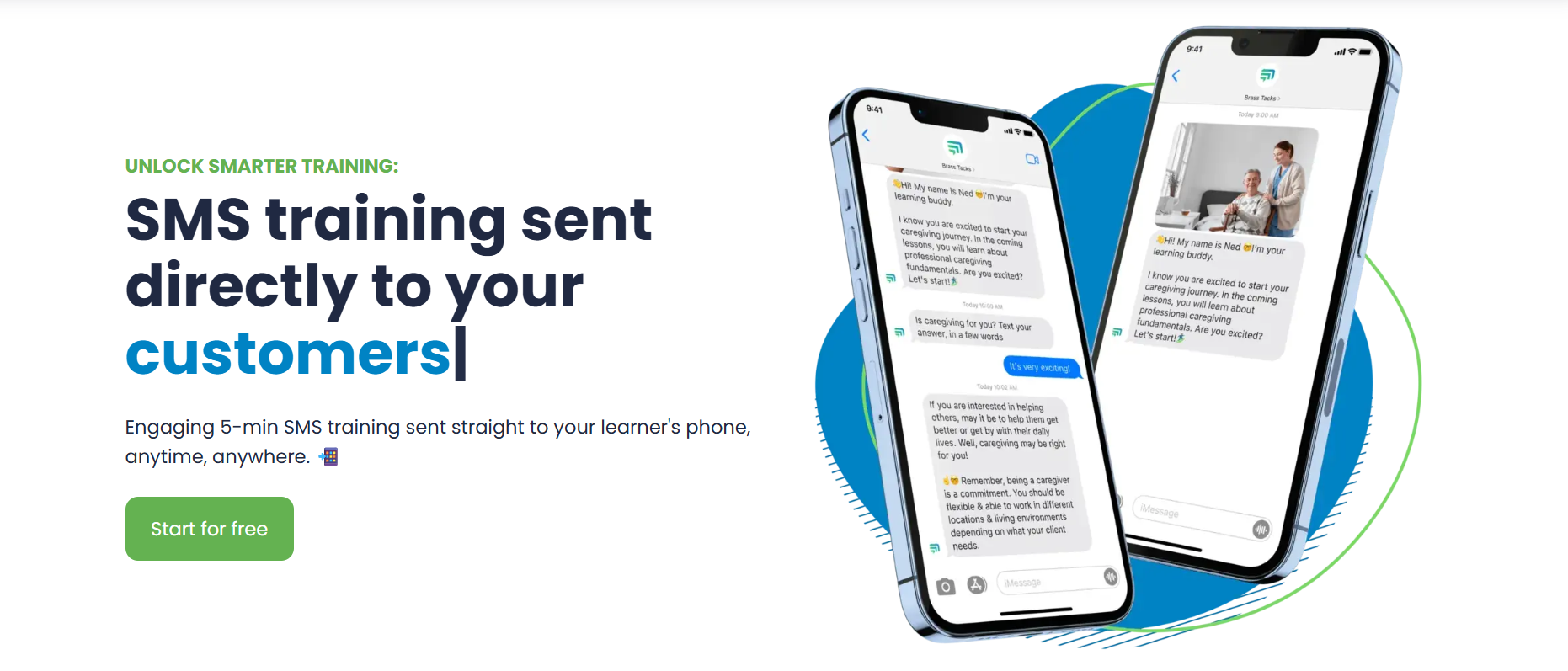
Brasstacks LMS is built from the ground up specifically for agile customer success and training teams needing rapid deployment and frictionless external learning. It is designed around modern microlearning principles; Brasstacks eliminates the administrative overhead of legacy platforms, allowing teams to launch bite-sized product tutorials, automated onboarding sequences, and branded customer academies in weeks rather than months.
Its intuitive content authoring tools are tailored for rapid course creation and seamless updates as software product features evolve. The platform features a modular multi-tenant architecture that enables customer enablement teams to provision personalized, custom-branded academies for key enterprise clients without adding administrative complexity.
Furthermore, Brasstacks provides native telemetry tracking that directly connects course completion, quiz milestones, and academy engagement to real-world product feature adoption and account health. It serves as the ideal solution for mid-market to enterprise SaaS companies seeking modern UX, rapid onboarding, and deep customer success ecosystem integration.
Key Strengths:
- Intuitive and adaptive content authoring tailored for rapid product tutorial creation and continuous updates as software progresses.
- Modular multi-tenant architecture enabling personalized academies and custom-branded environments for enterprise clients without administrative fatigue.
- Advanced telemetry tracking directly connecting course completions and learning milestones to product feature adoption and account health.
Ideal Use Case: Mid-market to enterprise SaaS companies seeking a modern UX, rapid onboarding deployment, and deep customer success ecosystem integrations.

Skilljar
Skilljar is an enterprise-grade external learning platform widely adopted by large customer education organizations and mature B2B software enterprises. Engineered specifically to train external audiences, Skilljar excels at delivering structured customer academies that scale alongside growing user bases.
One of its primary strengths lies in its robust analytics engine and deep native integrations with essential revenue tools like Salesforce, Gainsight, and HubSpot. These connections allow revenue operations teams to tie course engagement directly to customer health scores and account renewals.
Additionally, Skilljar provides established certification and badging workflows that help validate customer expertise and drive loyalty. However, organizations evaluating Skilljar should keep in mind that implementation timelines can be lengthy.
Setting up complex multi-domain architectures and custom portal configurations often requires significant dedicated administrative bandwidth and ongoing specialized management, making it best suited for mature organizations with dedicated customer enablement teams.
Docebo
Docebo is a comprehensive, AI-powered enterprise learning management system designed to support both internal employee development and external customer training programs. It is acknowledged for its deep feature set; Docebo leverages artificial intelligence to automate content tagging, personalize learner recommendations, and facilitate real-time content localization across global customer bases.
Its extensive compliance tooling, multi-language support, and advanced security configurations make it a strong candidate for large global enterprises operating in highly regulated industries. However, because Docebo was originally architected as an internal HR training tool, its user interface can feel heavy and overly complex for agile customer teams focused purely on lightweight product onboarding and quick tutorials.
The platform carries a high cost profile, and its legacy internal architecture requires extensive configuration to deliver a frictionless external customer experience, making it less optimal for fast-moving customer education teams seeking rapid deployment.
Northpass
Northpass is a specialized customer training platform designed specifically to accelerate SaaS product adoption and optimize post-sale customer success workflows. It offers an intuitive and straightforward interface for both external learners and administrators, ensuring high engagement and minimal onboarding friction.
The platform features strong native integrations with popular customer platforms like HubSpot and Gainsight, enabling customer success teams to automate course enrollments based on account triggers and track learning progress directly within their primary CRM dashboards.
Northpass provides effective onboarding path management tools that help guide new users through structured learning sequences tailored to their specific roles.
While it serves as an effective solution for SaaS companies scaling their customer enablement, organizations requiring advanced multi-tenant isolation, custom CSS branding, or complex multi-domain environments may find these advanced customization capabilities require upgrading to higher-tier, enterprise-level pricing plans.
Teachable
Teachable is an accessible, user-friendly online course creation platform popular among individual creators, independent consultants, solopreneurs, and early-stage startups. Built primarily for simple digital course delivery and monetization, Teachable offers a low entry price point, an intuitive drag-and-drop course builder, and built-in payment processing tools powered by Stripe and PayPal.
This allows non-technical creators to launch video-based courses, host downloadable resources, and collect payments with minimal setup time. However, Teachable is fundamentally designed for B2C and creator user cases rather than enterprise B2B customer training. It lacks critical B2B software features such as multi-tenant client isolation, native bi-directional CRM integrations, enterprise security compliance, and granular role-based user management.
For scaling SaaS companies seeking to integrate customer training data with customer success workflows or deliver white-labeled enterprise client portals, Teachable lacks the necessary technical architecture and analytical depth.
Implementation Roadmap for Operations & Training Leaders
Deploying a customer training platform is a strategic go-to-market rollout that directly influences customer time-to-value, retention, and overall customer success team leverage.
Rather than viewing software deployment as a simple IT event, operations and training leaders must follow a structured, phased implementation framework to ensure rapid platform adoption and clear alignment with business goals.
Phase 1: Discovery & Strategy Alignment
The implementation process begins with establishing clear business objectives, cross-functional alignment, and target performance benchmarks. During the first two weeks, operations leaders and training managers define core Key Performance Indicators (KPIs), such as target Time-to-Value (TTV) reductions, tier-1 support ticket deflection percentages, and account certification targets.
Equally important during this initial phase is mapping customer buyer personas and critical journey touchpoints. By analyzing how administrators, technical leads, and end-users interact with your software, your team can map out personalized onboarding routes that deliver relevant content at the precise moment of user intent.
Phase 2: Architecture & Platform Configuration
Once the strategic baseline is established, the focus transitions to technical setup and platform architecture during weeks three and four. Operations teams configure custom domain settings and apply corporate branding, logos, and custom CSS to ensure the platform feels like a native extension of your primary product suite.
Simultaneously, technical leads configure friction-free authentication mechanisms, establishing SAML, OAuth, or social Single Sign-On (SSO) alongside magic-link login options.
For organizations serving enterprise accounts, strategic channel partners, or distinct reseller tiers, multi-tenant client portals are provisioned to ensure isolated learning environments. Finally, bi-directional integrations with CRM platforms (Salesforce, HubSpot) and Customer Success Management tools are established to automate data sync and user provisioning.
Phase 3: Content Structuring & Migration
During this phase, attention turns to building out the learning environment and structuring educational materials. Training teams format core product tutorials, organize bite-sized video walkthroughs, and arrange modular onboarding paths personalized to user personas.
This phase also involves building interactive assessments, skill-check quizzes, and automated certification workflows. Setting up dynamic digital badging and shareable certificates gives learners tangible incentives to complete advanced paths while boosting vendor credibility across professional networks.
Phase 4: Pilot Launch & Feedback Loop
Before rolling out the academy to your entire user base, this phase focuses on a controlled pilot launch with a select cohort of beta customers and internal Customer Success Managers (CSMs).
This pilot phase allows training teams to observe real-world learner behavior, identify completion friction points, and evaluate user experience (UX) quality. Qualitative feedback gathered from pilot participants provides critical insights regarding tutorial clarity, navigation ease, and content relevance, enabling your team to refine modules before full market implementation.
Phase 5: Full Launch & Continuous Optimization
The platform moves into full commercial launch. The academy is introduced across multiple customer communication channels through automated email sequences, CSM onboarding collateral, and direct in-app notification triggers embedded within the core product UI.
Post-launch, operations and education leaders continuously monitor analytics dashboards to track enrollment velocity, course completion rates, assessment scores, and account engagement trends.
By correlating learning metrics with product usage telemetry and customer health scores, teams can iteratively update product tutorials, remove learning blockers, and demonstrate measurable business outcomes to key stakeholders.
How to measure the ROI of Customer Training Programs?
To justify investment in a customer training platform, operations and training leaders must move beyond vanity metrics and connect learning analytics directly to core financial and operational outcomes.
To prove ROI, operations leaders must connect course telemetry to business outcomes. Leveraging learning analytics and predictive insights allows teams to evaluate account health and know exactly how to measure training effectiveness across customer cohorts.
Evaluating a learning management system for customer training requires establishing clear telemetry pipelines between your LMS, CRM, and customer success tools to quantify business impact. The following are some Key Performance Indicators for Customer training:
Acceleration of Time-to-Value (TTV)
Time-to-Value measures the duration from initial contract execution to the point where a customer achieves their first core outcome or feature activation milestone within your software. Proactive learning paths accelerate TTV by guiding new users through guided configurations without waiting for manual onboarding sessions.
To evaluate this metric, compare the average onboarding duration of accounts whose users complete onboarding paths within 14 days against accounts with low or no LMS engagement. The primary metric to track is the percentage reduction in days required to reach the first key product milestone.
Tier-1 Support Ticket Deflection
Unassisted customer onboarding frequently leads to repetitive, low-complexity support tickets regarding basic user permissions, standard settings, and initial feature configurations. High-performing customer academies deflect these inquiries by serving answer-focused product tutorials directly at the point of need.
To measure deflection, track support ticket volume for specific features before and after deploying corresponding micro-learning modules. Compare ticket submission rates per account between trained and untrained customer cohorts. The core impact is measured in total cost savings from deflected support tickets and reduced CSM support touchpoints.
Product Adoption Depth & Feature Velocity
Sustained software adoption requires users to progress beyond primary workflows into advanced platform capabilities. Automated certifications and bite-sized product tutorials encourage users to discover and adopt secondary features that deepen product stickiness.
Correlate user-level LMS completion data with product analytics platforms to assess depth. Measure feature usage frequency among certified users compared to uncertified peers in similar account tiers. Look for a percentage increase in daily or monthly active usage and broader feature adoption per account.
Gross Retention & Net Retention Rate (NRR)
The ultimate measure of customer education ROI is its direct contribution to recurring revenue. Well-educated customers realize greater value, experience fewer implementation blockers, and expand their account seats over time.
To measure financial impact, segment customer accounts by LMS engagement levels based on the percentage of team members certified. Analyze annual retention rates, expansion ARR, and churn rates across these distinct cohorts. The primary success benchmark is the Net Retention Rate (NRR) delta between trained accounts and non-trained accounts over a 12-month trailing window.
Conclusion
Selecting the right learning management system for customer education is a strategic decision that reverberates across your entire go-to-market organization. While legacy HR-focused LMS platforms were built to track mandatory internal compliance, modern customer teams require agile, frictionless learning platforms engineered specifically for external audiences.
Customer-facing platforms must deliver consumer-grade user experiences, multi-tenant portal flexibility, custom domain white-labeling, and native bi-directional CRM data flows. By removing authentication barriers and delivering modular, interactive product tutorials at the point of need, modern academies transform customer onboarding from a manual operational bottleneck into a scalable driver of product adoption and retention.
Organizations building a future-proof customer training ecosystem should prioritize solutions that deploy rapidly, scale multi-tenant client environments effortlessly, and tie learning telemetry directly to customer health scores.
Platforms like Brasstacks LMS set the standard for this modern approach, offering agile content authoring, friction-free learner experiences, and deep integrations that empower customer success and RevOps teams to prove measurable business ROI.
Actionable Next Steps:
- Conduct a Content & Friction Audit: Review your existing post-sale onboarding materials and identify where customers experience the highest drop-off or submit repetitive support tickets.
- Define your Technical Requirements: Determine whether your program requires multi-tenant client isolation, enterprise single sign-on (SSO), custom white-label subdomains, or bi-directional Salesforce/HubSpot integrations.
- Pilot an External Customer LMS: Test a modern, microlearning-first platform like Brasstacks LMS with a small cohort of new accounts to measure initial completion velocity, TTV acceleration, and qualitative learner feedback before committing to a full rollout.