
Share this
by Tee Dang Mankiewicz on Feb 9, 2026, 12:24:47 PM
Employee training LMS has become a foundation of how modern organizations build skills, stay compliant, and adapt to constant change. In today’s AI-driven world, learning can’t pull employees away from their work; it has to meet them where they already are.
The best employee training software supports learning in the flow of work by embedding training directly into the tools people use every day, while also offering built-in content authoring and access to robust content marketplaces so teams can roll out critical learning, especially compliance training, exactly when it’s needed.
Mobile learning is no longer optional; it’s essential for reaching remote, frontline, and distributed workers wherever they are. When these elements come together, the impact is clear: leading employee training platforms consistently increase adoption rates and earn satisfaction scores to match, proving that employees prefer accessible, relevant, and well-designed learning programs.
In this guide, we’ll break down the best employee training LMS available today, drawing on real user reviews to help you confidently choose the right solution for your organization.
Quick Overview of the 20 Best Employee Training LMS
|
LMS Name |
Recommended for |
Not Ideal for |
|
Brasstacks LMS |
Scalable, small- to medium-sized enterprise learning for employees, customers, and more with next-generation analytics and personalization. |
Enterprise teams with deep customization |
|
Docebo |
Scalable, AI-driven enterprise learning for employees, sales enablement, customers, and more with advanced analytics and personalization. |
Small teams or simple training needs that don’t need customization. |
|
Connecteam |
Simple mobile training and workforce management for frontline workers |
Complex enterprise learning needs |
|
iSpring Learn |
Straightforward and intuitive content authoring and delivery |
Very large enterprises with complex reporting or customization needs |
|
Absorb LMS |
Compliance and employee training with AI resources |
Small organizations with budget limitations, simple use cases, and enterprises in need of extensive customization. |
|
SkyPrep |
Simplicity and Basic Reporting for straightforward learning programs |
Complex customization or multi-audience training at scale |
|
TalentLMS |
Small and medium-sized businesses (SMBs) looking for flexibility |
Large enterprise needs with advanced data or multi-portal requirements. |
|
LearnUpon |
SMBs and mid-market organizations looking for clear admin UX and integrations |
Enterprise-level customizations and integrations |
|
360Learning |
Collaborative, peer-driven learning with strong social learning features |
Traditional top-down compliance-only training and enterprise-grade customization |
|
Trainual |
SMBs looking for a way to manage their SOPs and organizational knowledge |
Intricate customization needs |
|
Litmos |
Fast deployment and basic LMS needs |
Intricate reporting and compliance needs |
|
Continu |
Straightforward training workflow and easy-to-implement onboarding |
Very large enterprise reporting requirements |
|
WorkRamp |
Enterprise compliance training with mobile and offline support |
High degree of customization and complex reporting. |
|
LearnWorlds |
Whitelabeling and customizable branding with strong content creation |
Organizations looking for a highly scalable platform |
|
Cypher Learning |
Flexible social and personalized learning |
Enterprise-level reporting |
|
Seismic Learning |
Sales enablement and customer-onboarding teams |
Wider internal training and complex customization requirements |
|
Adobe Learning Manager |
Adobe ecosystem integration |
Small teams or budget-focused buyers who don’t need Adobe ecosystem integration |
|
Thinkific |
Course creation and monetization with simple training delivery |
Large enterprise compliance or multi-audience programs |
|
D2L Brightspace LMS |
Adaptive learning for extensive sales training |
Enterprises with intricate customization needs |
|
Blackboard Learn MS |
Broad integration ecosystem |
Modern corporate training UX and customization |
What is an employee training LMS?
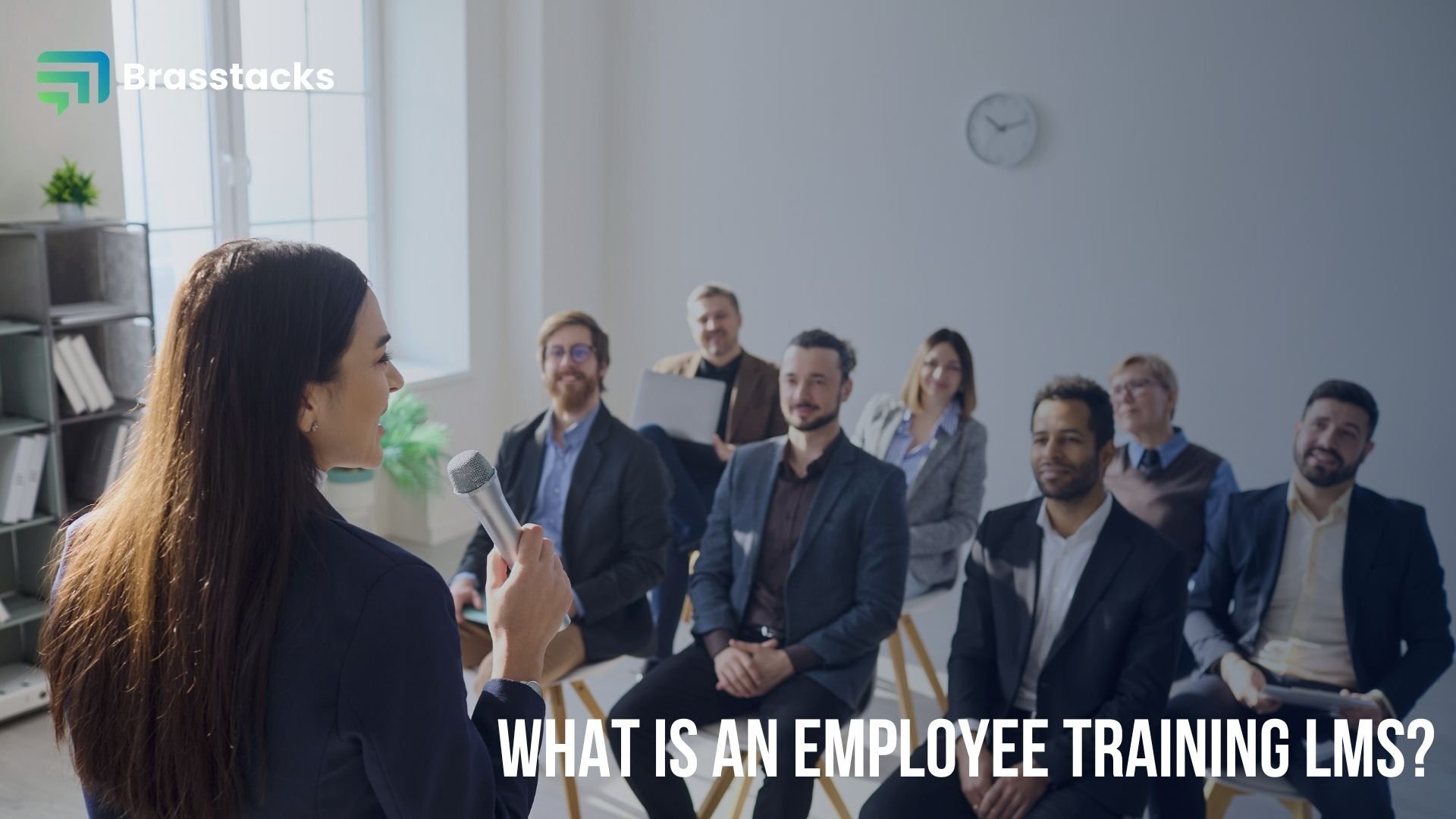
An employee training LMS is a central hub for developing your team’s potential. It’s a platform built specifically to help you create, share, and evaluate all your learning programs in one place, moving you beyond scattered spreadsheets and disconnected tools.
The right platform does more than just host courses; it actively helps you build a smarter and more effective workforce. You can deliver personalized learning paths that address specific skill gaps and keep your team ahead of the curve, all while getting the data you need to prove training ROI.
This isn’t just about compliance or ticking boxes; it’s about future-proofing your organization. As skills evolve faster than ever, having a dedicated web-based training software ensures your people are always prepared for what’s next, helping you build a culture of learning that attracts and retains top talent.
Key Features and Benefits of the Best Employee Training LMS
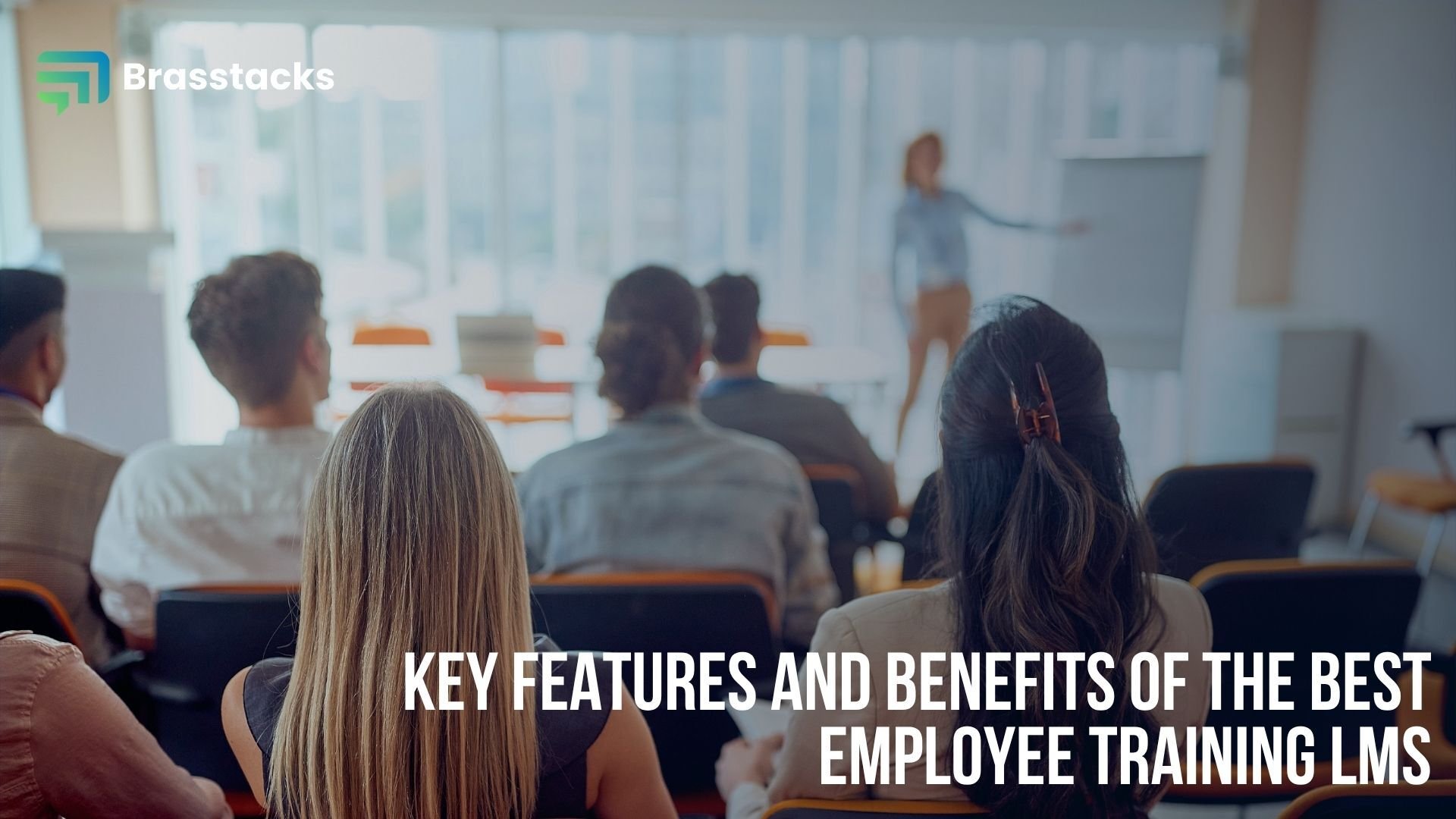
Finding the right online training software means looking past the buzzwords to the features that truly solve your training challenges. You need tools that deliver meaningful learning experiences without burying you in admin work. The best LMS understands your time is limited, your learners are diverse, and your goals are ambitious.
Today’s platforms do more than just deliver courses; they act as a strategic partner. You’ll find intelligent automation that personalizes learning paths and analytics that prove your business impact. They also embrace the reality that learning happens everywhere, supporting your teams in the office, at home, or on the go.
Ultimately, a great platform feels like a natural extension of your workflow, adapting to your unique needs. Look for the flexibility to scale, robust mobile access, and sophisticated reporting that grows with you.
AI-Powered Course Creation
Imagine turning weeks of content development into a streamlined, intelligent process. AI-powered tools can instantly generate courses from your existing materials, build personalized learning paths, and even translate content for your global teams. This frees you up to emphasize on strategy while the system adapts to your learners’ needs.
Leading business training software takes this a step further, with AI that learns from user interactions to constantly refine course recommendations and effectiveness. This means your learning ecosystem gets smarter over time, allowing you to drive strategic initiatives while the platform handles the heavy lifting of content personalization.
Automated Compliance Tracking
Automated compliance tracking lifts a huge administrative weight, letting your platform manage the details so you can focus on the big picture. The right system automatically assigns courses, sends renewal reminders, and maintains detailed audit trails. You gain peace of mind knowing your organization is prepared for any compliance review.
You’ll trade hours of chasing down reports for time spent improving the quality of your training content. This transforms compliance from a simple checkbox exercise into a valuable part of your team’s professional growth, reducing risk while adding real value.
Mobile Access for Remote Teams
Your team works everywhere, and your training should too. A powerful mobile experience allows employees to learn during their commute or between meetings, with offline access for those in the field. By meeting learners where they are, you remove barriers and naturally boost engagement.
A great mobile platform isn’t just a shrunken-down desktop site; it’s an experience designed specifically for learning on the go. Look for intuitive navigation and fast-loading content that keeps your remote and hybrid teams connected. This ensures learning is always accessible and never a chore, no matter the device.
Robust Analytics and Reporting
Great reporting helps you prove that training is a strategic catalyst for business growth, not just a cost center. The right analytics can help you track progress, pinpoint knowledge gaps, and connect learning initiatives directly to business outcomes. This gives you the data to clearly demonstrate the ROI of your programs to leadership.
Your goal is to find a platform that delivers actionable insights. The best training LMS helps you make smarter decisions about your content and resource allocation. Look for customizable dashboards that give every stakeholder the exact information they need.
20 Best Employee Training LMS
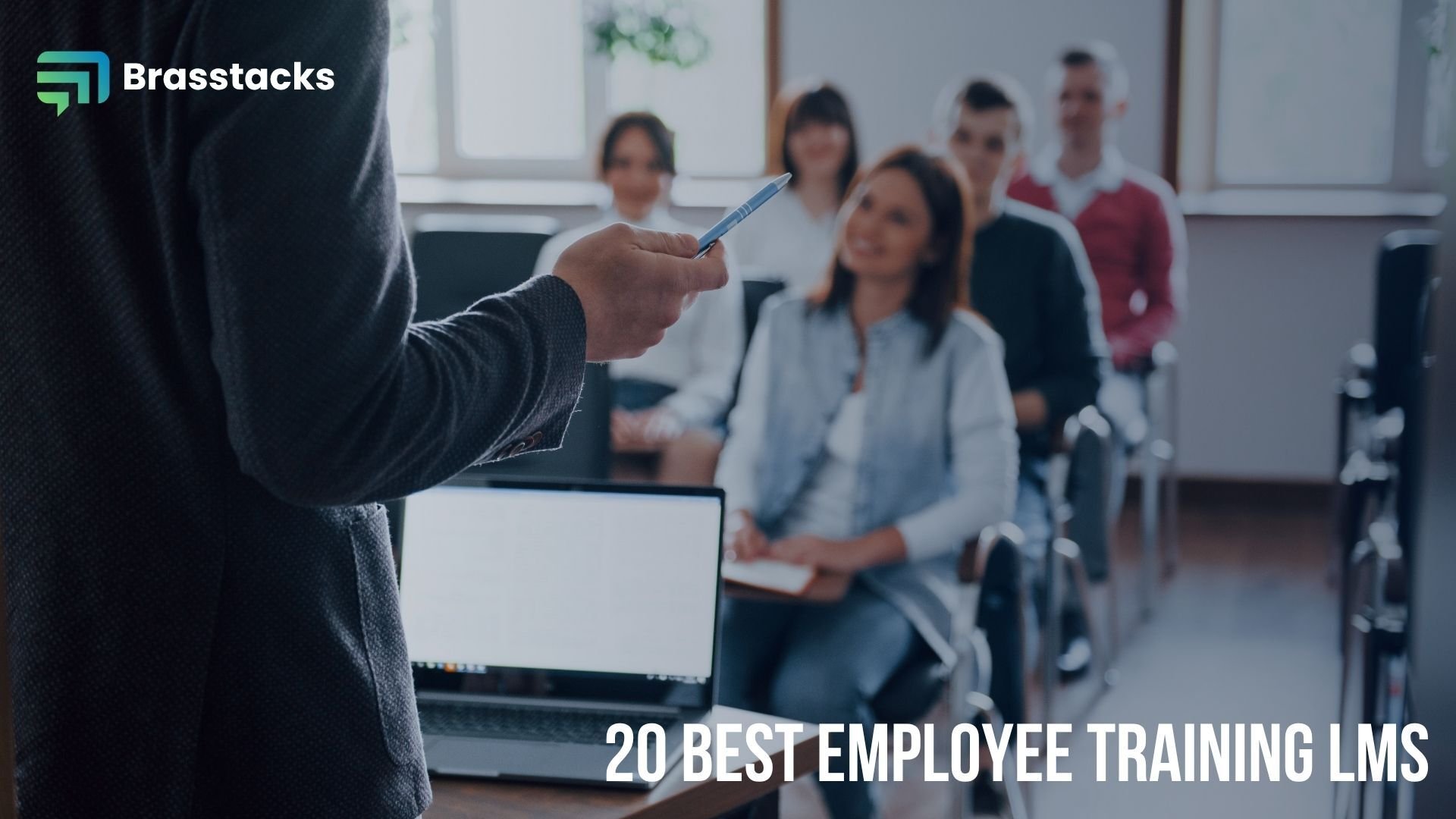
Now that you know what employee training software is and what its top features and benefits are, let’s take a closer look at the top 20 employee training LMS platforms for making an informed choice.
Brasstacks LMS
Brasstacks is a mobile-first, microlearning LMS engineered for businesses looking for frictionless, high-engagement employee, customer, and compliance training. Designed to fit seamlessly into the flow of work, Brasstacks delivers bite-sized, 5-minute training modules directly to learners’ mobile devices via SMS, eliminating the need for complex apps, password management, or technical onboarding.
It features AI-powered authoring tools to instantly convert standard operating procedures (SOPs) into bite-sized lessons, along with automated learning paths and robust analytics to drive high completion rates, boost knowledge retention, and prove the measurable ROI of training programs.
Top features:
- SMS-based frictionless delivery to reach remote and mobile workforces directly without requiring app downloads or login credentials.
- 5-minute microlearning modules engineered for high completion rates and optimal knowledge retention.
- AI-powered course builder that converts internal documents and SOPs into structured lessons within minutes.
- Extensive course library featuring 300+ pre-built, state-compliant courses covering industry-specific topics.
- Automated learning paths allowing administrators to sequence and schedule months of training in advance.
- Automated certification management with branded certificates of completion and auto-recertification tracking upon expiration.
- Real-time engagement analytics to monitor learner progress, evaluate effectiveness, and demonstrate training ROI.
Docebo
Docebo is an AI learning platform built for enterprises or businesses looking for a high degree of scalability, flexibility, extensibility, and customization. Docebo’s interactive training software is designed to support multiple audiences - employees, customers, and partners - from a single platform while delivering personalized learning experiences at scale. It offers advanced automation, deep integrations, and robust analytics to reduce manual work and demonstrate the business impact of the programs.
Top Features:
- Advanced analytics for complex reporting needs and proving the ROI of learning.
- AI authoring or just-in-time learning
- Seamless integrations for learning in the flow of work
- Extended enterprise capabilities supporting employee, customer, and partner training
- Headless learning delivery to embed learning anywhere from websites to apps and portals, while maintaining full brand control
- Mobile app for learning on the go
- Multilingual and Multi-tenant support ideal for global learning programs.
Connecteam
Connecteam is an employee training and workforce management platform designed for organizations with large frontline or deskless workforces. It focuses on delivering simple, mobile-first learning, onboarding, and communications that are easy for employees to access without formal LMS training. By combining training with scheduling, time tracking, and team communication, Connecteam helps organizations drive adoption and keep employees aligned even when they’re constantly on the move.
Top Features:
- Built-in employee collaboration tools including chat, announcements, and updates
- Knowledge base and document management for quick access to SOPs and policies
- Easy setup and intuitive administrative experience with minimal technical expertise
- Workforce management features like scheduling, time tracking, and task management
iSpring LMS
iSpring LMS is a user-friendly and intuitive learning platform best known for its tight integration with PowerPoint and its ease of use for non-technical teams. It’s a solid option for organizations that want to quickly create, deliver, and track training without a steep learning curve. iSpring is often used for internal employee training, onboarding, and basic compliance programs.
Top Features:
- Built-in authoring tools optimized for PowerPoint-based course creation
- Mobile learning with offline access
- Assessment and certification management
- Simpler learner management and progress tracking
Absorb LMS
Absorb LMS is a feature-rich platform designed to support structured employee training and compliance programs. It offers a contemporary interface, solid automation, and a wide range of integrations, making it a recommended choice for organizations that want a balance of enterprise functionality and usability.
Top Features:
- Automated enrollments and learning paths
- AI-powered content recommendations
- Integrations with HRIS, CRM, and productivity tools
- Content authoring and management tools
SkyPrep
SkyPrep is an easy-to-use LMS designed for organizations that want to launch training quickly without complex configuration. It focuses on simplicity and usability, making it a good fit for smaller teams or departments running internal training programs.
Top Features:
- White-label branding options
- Simple course creation and delivery
- Mobile-friendly learner experience
- Advanced reporting and tracking
TalentLMS
TalentLMS is a cloud-based LMS known for its quick implementation and intuitive interface. It’s often chosen by SMBs that need a cost-effective way to manage employee training, onboarding, and certifications without heavy customization requirements.
Top Features:
- Fast setup and easy administration
- Built-in course authoring tools
- Multi-portal support
- Gamification features like badges and points
- Integrations with common business tools
- Mobile-responsive learning opportunities
LearnUpon
LearnUpon is designed to support employee, customer, and partner training through multiple portals. It offers a clean admin experience and strong automation, making it a popular choice for organizations that need to manage several audiences without excessive complexity.
Top Features:
- Automated enrollments and notifications
- Reporting and dashboards
- Multi-portal architecture
- Learning paths and certifications
- Mobile-friendly learner access
- Integrations with HR and CRM systems
360Learning
360Learning focuses on collaborative learning by enabling subject matter experts to create and share content across the organization. It’s well-suited for companies that value social learning, knowledge sharing, and continuous skill development.
Top Features:
- Gamification and eLearning engagement tools
- Social learning features like comments and peer feedback
- Collaborative course-creation tools
- Learning analytics and insights
- AI-assisted course development
Trainual
Trainual is a training and documentation platform that helps organizations centralize processes, policies, and knowledge. It’s commonly used by small and growing teams to standardize onboarding and ensure consistency as the business scales.
Top Features:
- SOP and policy documentation tools
- Role-based onboarding paths
- Knowledge base functionality
- Progress tracking and accountability
- Mobile accessibility for learners
Litmos
Litmos is a widely used LMS that offers fast setup and access to a built-in content library. It’s often chosen by organizations that need to launch training programs quickly, though teams may encounter limitations as their training needs become more complex.
Top Features:
- AI assistant
- Basic reporting tools
- Mobile learning support
- Integrations with common business software
- AI content authoring tools
Continu
Continu is a contemporary LMS focused on simplicity and ease of use. It’s designed to help teams roll out internal training programs quickly, with an emphasis on clean UX and minimal admin complexity.
Top features:
- Simple course creation and program delivery
- Learning paths and certifications
- eCommerce functionality
- Mobile-friendly learner experience
- Integrations with common business tools
WorkRamp
WorkRamp is an enterprise learning platform built to support large-scale training initiatives, including compliance, onboarding, and partner enablement. It’s often used by organizations that need structured learning with strong administrative controls.
Top Features:
- AI coaching and feedback
- AI-driven performance analysis
- AI content creation
- Analytics and reporting tools
- Integrations with HR and CRM platforms
LearnWorlds
LearnWorlds is a learning platform designed for organizations that want strong control over branding and learner experience. It’s commonly used for customer education and external training programs with a focus on interactivity.
Top Features:
- Interactive course creation tools
- eCommerce and monetization options
- White-label branding and custom domains
- Gamification with points, achievements, and badges
CYPHER Learning
CYPHER Learning is a modern LMS that supports employee training through personalized learning paths and social engagement features. It’s suitable for organizations that prefer flexibility without heavy enterprise complexity.
Top Features:
- Course authoring and content management
- Gamification and Automation
- eCommerce Functionality
- Integration with business tools
Seismic Learning
Seismic Learning is designed specifically for sales and customer-facing teams. It combines learning, coaching, and content delivery to help organizations improve sales readiness and operational performance.
Top Features:
- Sales-specific learning paths
- AI-driven coaching and role-play
- Content management and delivery
- Integrations with CRM and sales tools
- Mobile access for sales teams
Adobe Learning Manager
Adobe Learning Manager is a robust enterprise learning platform built to support complex training programs across employee, partner, and extended enterprise audiences. It emphasizes automation, personalized learning paths, and seamless integration with business systems, making it a strong choice for compliance-heavy industries and organizations that want content delivered in the workflow. Organizations can scale learning while maintaining centralized control and visibility into impact with Adobe’s ecosystem.
Top Features:
- Automated enrollments and progression workflows
- Deep integrations with HR, identity, and productivity tools
- White labeling for branding control
- Personalized learning paths with AI recommendations
Thinkific
Thinkific is a learning platform built for creating, marketing, and selling online courses. While it’s not a traditional employee LMS, it’s popular for customer education and training businesses.
Top features:
- eCommerce payment processing and subscriptions
- Analytics and sales reporting
- Course creation and hosting tools
- Mobile-responsive accessibility
- Custom branding and websites
D2L Brightspace
D2L Brightspace is an enterprise-grade LMS known for adaptive learning and strong accessibility standards. It’s used by organizations that require robust learning design and analytics capabilities.
Top Features:
- Advanced analytics and insights
- Mobile learning support
- Adaptive and personalized learning paths
- Integrations with business tools
- Content creation and management tools
Blackboard Learn LMS
Blackboard Learn is a long-established LMS widely used in education and training environments. While powerful, it’s often considered more traditional compared to newer, learner-centric platforms.
Top features:
- Mobile learning access
- Analytics and reporting
- Course and content management tools
- Integrations with third-party tools
- Assessments and grading workflows
Frequently Asked Questions about Employee Training LMS
What is the best employee training LMS for deskless and frontline workers?
The best employee training software for deskless workers is a friction-free, mobile-first learning system that delivers microlearning directly to mobile devices. Platforms like Brasstacks use SMS-based delivery to send 5-minute training modules straight to employees’ phones. It eliminates app downloads, login credentials, and computer access barriers, driving completion rates above 87% for non-desk, field, and retail teams.
How do you train employees who do not have access to a computer or email?
You train employees without computer or email access by using SMS-based microlearning platforms. Systems like Brasstacks send secure, interactive training links directly via text message. Learners click the link, complete a bite-sized 5-minute lesson on their mobile browser, and submit proof of completion, all without needing a company email, an app download, or a password reset.
What is the difference between microlearning and a traditional employee training LMS?
A traditional LMS relies on long-form, desktop-based courses, requiring manual navigation and password logins. Microlearning delivers short, focused content, typically under 5 minutes, to improve knowledge retention and fit into the active workflow. Brasstacks combines microlearning with automated SMS delivery, allowing organizations to maintain full compliance and tracking without pulling workers away from their daily tasks.
How does AI help in creating employee training courses?
AI accelerates course authoring by automatically converting standard operating procedures (SOPs), PDFs, and internal safety manuals into bite-sized training modules. With Brasstacks, managers upload existing company documents, and the AI instantly generates structured micro-lessons, quizzes, and learning paths in minutes, drastically reducing administrative setup time.
How do companies track compliance for remote or mobile workforces?
Companies track compliance using automated learning paths paired with real-time analytics. Modern training platforms schedule recertification intervals, send automated SMS reminders, and log completions automatically. Brasstacks provides real-time dashboards and branded completion certificates, giving managers instant visibility into workforce compliance and audit readiness.
Conclusion
Selecting the right employee training LMS comes down to how well a platform fits into your team’s daily workflow and operational reality. Complex, feature-heavy learning platforms work well for traditional desk-bound enterprises, but modern organizations with a remote workforce need a frictionless solution to drive immediate execution.
Brasstacks reimagines employee training by meeting learners directly where they already are: on their phones via SMS. By eliminating app downloads, password barriers, and lengthy desktop sessions, Brasstacks transforms training from a disruptive chore into a seamless, 5-minute daily habit.
With AI-driven course creation, automated compliance paths, and real-time completion tracking, Brasstacks empowers growing businesses to boost knowledge retention, streamline onboarding, and achieve higher completion rates without adding administrative overhead. When training is bite-sized, accessible, and integrated into the daily workflow, your workforce stays compliant, skilled, and ready to drive measurable business results.