

Share this
by Tee Dang Mankiewicz on May 7, 2026 12:55:25 PM
Every year, companies spend billions on training programs such as workshops, seminars, mandatory eLearning modules, and then wonder why they aren’t impacting the organizational growth. Employees forget 70% of what they learned within a week, managers revert to old habits, and the organization stays stuck in the same patterns. The problem isn’t the training itself. It’s that training without culture is just an event.
A learning culture is something fundamentally different. It’s an environment where continuous learning is integrated into how people work every day, not a quarterly obligation or an annual checkbox on an HR calendar. In a true learning culture, employees seek out new skills because growth is expected, supported, and rewarded at every level.
Building that kind of culture doesn’t happen by accident. It requires the right leadership mindset, the right infrastructure, and a deliberate strategy for making learning accessible, inclusive, and measurable. This guide walks you through exactly how to do that, from accessing where your organization stands today to leveraging AI and analytics to sustain momentum.
If you’re starting from scratch, it helps to understand the foundation: what employee training and development actually means in a modern organizational context.
What is a Learning Culture?
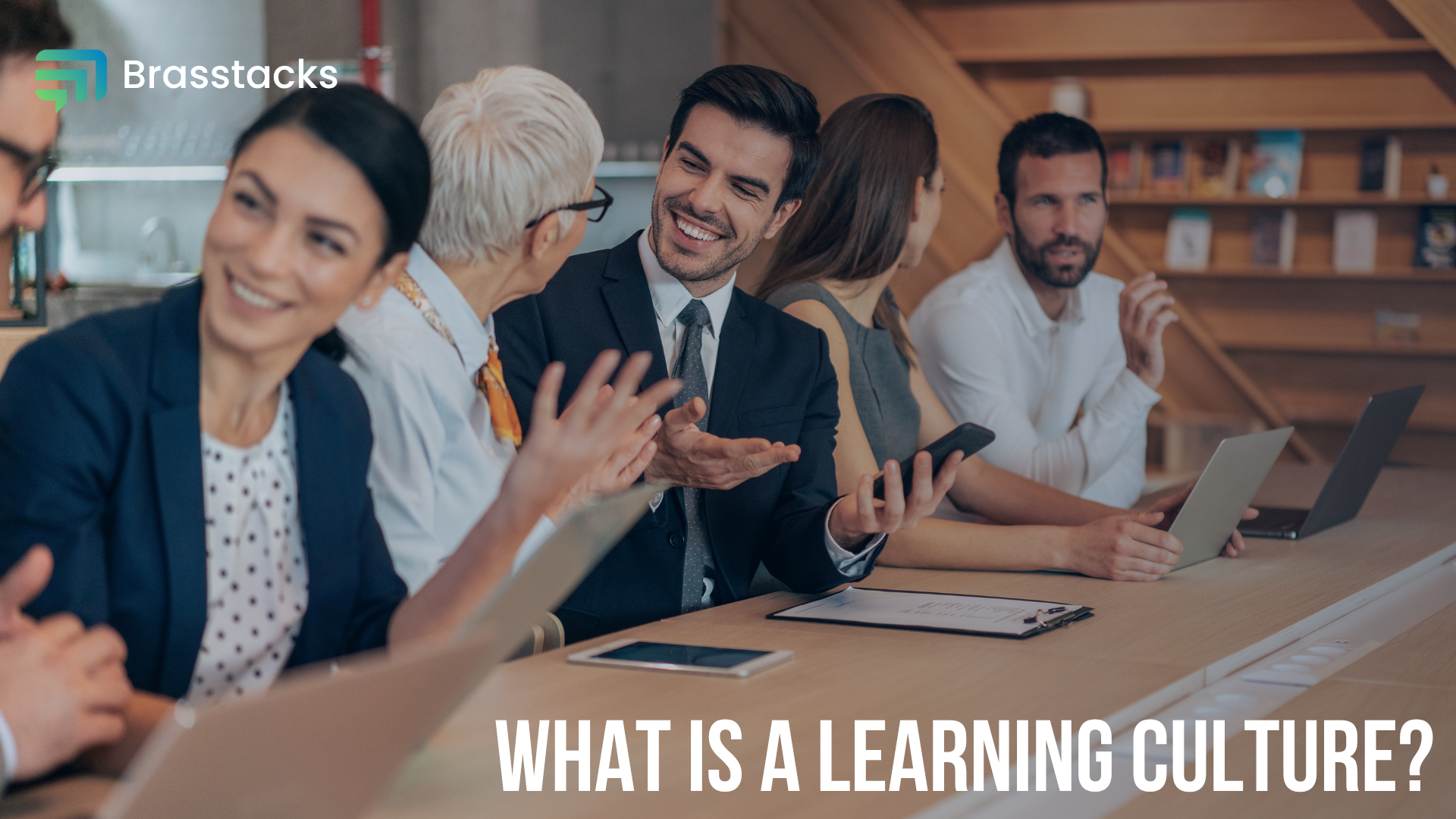
There’s a meaningful difference between an organization that runs training and one that lives learning. A training program is a scheduled event, such as a course, a workshop, or a compliance module. A learning culture is the environment that exists between those events. It’s what happens when an employee hits a challenge and instinctively looks for a way to grow through it rather than around it.
Learning culture shares four defining characteristics:
- Psychological safety: employees feel safe asking questions, admitting gaps, and experimenting without fear of judgment.
- Knowledge sharing: Insights flow freely across teams rather than being hoarded in silos.
- Growth mindset: effort and learning are valued as much as results, and failure is treated as data for continuous improvement.
- Leadership modeling: managers and executives visibly participate in learning, not just sponsor it.
According to LinkedIn’s Workplace Learning Report, companies with a strong learning culture see 30%-50% higher retention rates and significantly stronger internal mobility. Employees who feel their organization invests in their growth are more engaged, more productive, and far less likely to walk out the door.
This matter is beyond individual performance, too. When learning is cultural rather than episodic, it compounds. Teams get better at solving problems, adapting to change, and onboarding new skills faster than competitors.
The impact shows up directly in organizational performance, and it’s one of the most underutilized levers companies have for improving employee retention and engagement without raising headcount costs. Conclusively, training builds skills, but culture builds the habit of building skills.
Assess Your Current Learning Maturity
Before you can build a learning culture, you need an honest picture of where you’re starting from. Most organizations fall somewhere on a four-stage maturity spectrum:
- Reactive: Training happens only when a problem surfaces (Compliance failure, performance issues, new hire confusion)
- Structured: Training is planned and scheduled, but largely top-down and disconnected from daily work.
- Proactive: L&D is tied to business goals, and employees have development plans, and managers actively support growth.
- Embedded: Learning is inseparable from how work gets done; it’s a cultural default, not a functional initiative.
Honest self-assessment here is important. Ask these diagnostic questions across your organization:
- Do senior leaders visibly participate in learning, or just approve the budget for it?
- Is there a dedicated L&D budget, and has it grown or shrunk in the last two years?
- What percentage of employees complete training voluntarily versus under mandate?
- Do managers have structured conversations about their team’s development goals?
- How quickly does your organization respond when a new skill gap emerges?
If your answers skew toward reactive or structured, that’s not a failure; it’s a starting point. The most practical next step is a formal skill gap analysis to identify exactly where your workforce’s capabilities fall short of your business goals. It provides a skill map to build from rather than guessing which learning investments will move the needle.
Pair that diagnostic with a clear framework to measure training effectiveness from the beginning, so you’re tracking progress rather than just activity.
How to build a high-performance learning culture?
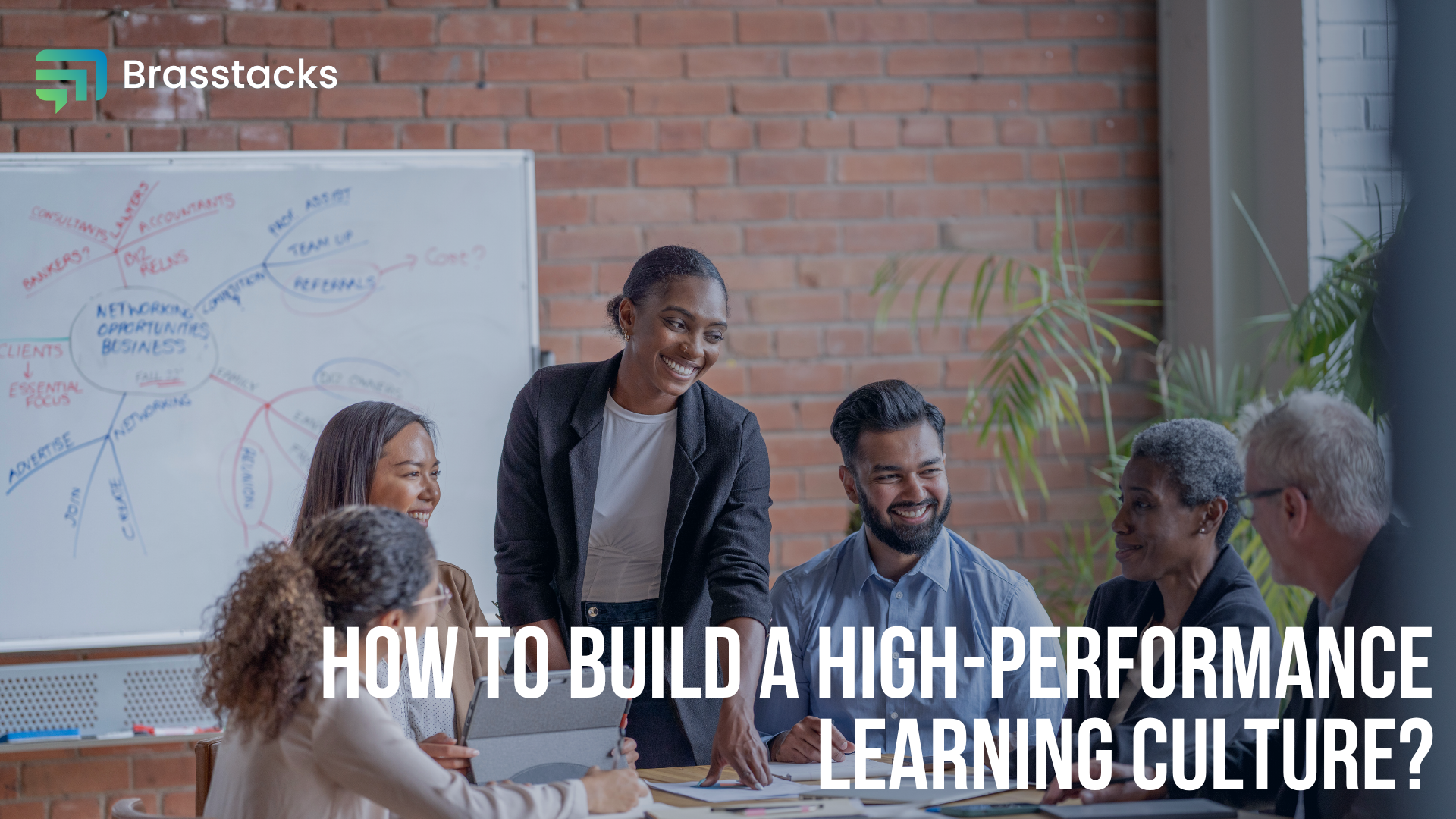
You can build the best LMS, design the most engaging courses, and set aggressive learning KPIs, and still fail to create a learning culture if leadership isn’t genuinely on board. Culture doesn’t flow from policy documents or HR mandates. It flows from what leaders visibly do every day.
When employees see a manager share what they learned from a failed project, or a VP openly enroll in a course on a skill they’re developing, it sends a signal no training email ever could: learning is valued here, at every level.
When they don’t see that, even the best L&D programs feel like obligations rather than opportunities. Getting leadership buy-in means going beyond budget approval. Executives and managers need to actively model learning behavior. Practical tactics that work:
- Share learning publicly: Leaders narrate their own development in team meetings, Slack channels, or internal newsletters.
- Participate in training alongside employees: Not just sponsor it from a distance.
- Tie learning goals to leadership performance reviews: Consider development as a leadership accountability, not just an HR metric.
- Protect learning time: Visibly block time for their own development and encourage direct reports to do the same.
- Sponsor high-visibility L&D initiatives: Budget ownership signals organizational priority.
Beyond modeling, the most powerful thing a leader can do is invest in coaching and mentorship as a daily practice. A manager who regularly holds structural development conversations multiplies the impact of any formal training program. This is why leadership development efforts should focus not just on business skills but on building leaders who know how to grow other people.
It starts with honest, consistent dialogue. Learning how to hold commitment conversations at the workplace, conversations where leaders and employees align on growth goals and accountability, is one of the most underrated tools for embedding learning into your culture at the team level. Leadership buy-in isn’t a prerequisite you check once. It’s an ongoing practice that either reinforces or undermines everything else you build.
How to Build the Right Infrastructure with an LMS?

A learning culture needs more than good intentions. It needs a system that makes learning easy to access, track, and scale. That’s where an effective Learning Management System becomes the operational foundation of everything you’re building.
Without centralized infrastructure, learning stays fragmented. Courses live in email attachments, training records exist in spreadsheets, and employees have no clear path for what to learn next. An LMS solves all of that by bringing content, learners, and data into a central place, delivering personalized learning paths, automating progress tracking, and giving L&D teams visibility into what’s actually working.
When evaluating an LMS for your organization, prioritize these capabilities:
- Mobile Access: Learning needs to happen where employees are, not just at a desk; mobile-first design is non-negotiable for distributed or frontline teams.
- Learning Analytics: Completion rates, assessment scores, and engagement data help you make informed decisions rather than guessing.
- AI-powered personalization: Impactful platforms use AI to recommend content based on role, skill gaps, and learning history, reducing the burden on L&D managers to assign everything mutually.
- Integration capabilities: HR systems, HRIS platforms, and communication tools like Slack or Teams should connect seamlessly.
- Scalability: Your LMS should grow with your headcount and content library without requiring a platform migration every two years.
Understanding what a business learning management system actually does and how it differs from a basic course hosting tool is the right starting point before you evaluate vendors. From there, getting familiar with the corporate LMS features helps you separate must-haves from nice-to-haves based on your specific training goals.
For organizations focused specifically on workforce development, exploring LMS features for employee development will help you prioritize capabilities such as career pathing, skills tracking, and manager dashboards. However, if you’re a smaller organization still building out your L&D function, there are purpose-built LMS for small businesses that offer enterprise-level functionality without enterprise-level complexity or cost.
The right LMS doesn’t just store your training content; it actively supports the learning culture you’re trying to build by making growth visible, accessible, and continuous.
Make Learning Accessible and Continuous
One of the fastest ways to kill a learning culture is to make learning inconvenient. If employees have to block a full afternoon, log into a clunky portal, or wait for the next scheduled training cycle, learning becomes a burden rather than a habit. The shift from episodic, scheduled training to always-on learning opportunities is what separates organizations that talk about learning culture from those that actually live it.
Accessibility starts with meeting employees where they are. For frontline workers, field teams, and distributed workforces, that means mobile-first learning: content that loads on a phone, works offline, and fits into a five-minute break between tasks. An effective mobile learning platform doesn’t just resize desktop content for a smaller screen; it’s designed from the ground up for on-the-go consumption with intuitive navigation and push notifications that nudge learners back without being intrusive.
Format matters just as much as delivery. Long-form courses have their place, but they’re not built for the daily rhythm of a busy employee. Microlearning fits naturally into workflows without demanding large chunks of uninterrupted time.
It’s one of the most practical formats for continuous learning because it lowers the activation energy required to actually start. The benefits of microlearning extend beyond convenience, too: bite-sized content improves focus, reduces cognitive overload, and makes it easier to revisit specific concepts without rewatching an entire module.
However, accessibility doesn’t guarantee retention. Employees can complete a course and forget most of it within days if there’s no reinforcement strategy in place. That’s where spaced repetition becomes essential, delivering review prompts and follow-up content at scientifically timed intervals to move knowledge from short-term recall to long-term memory.
Building spaced learning programs into your LMS ensures that what employees learn sticks, actually, compounding the value of every training investment your organization makes.
How to Embed Learning into the Daily Workflows of Employees?
Accessibility gets employees to the content. Inculcating learning into daily workflows is what makes it stick as a cultural habit. The goal is to eliminate the mental separation between “working” and “learning” because in high-performing organizations, they’re the same activity.
The most common reason learning culture initiatives stall is that learning remains fragmented. Employees are expected to do their jobs and complete training on top of everything else, as if the two are unrelated. That framing needs to change. Learning should be the mechanism through which work gets better, not a separate obligation that competes with it.
Here are some practical strategies to make this shift real:
- Just-in-time learning: Surface relevant microlessons or resources at the moment an employee needs them, such as a quick refresher before a client call or a process guide before tackling an unfamiliar task.
- Post-Project debriefs: Build structured reflection into project closeouts so teams capture lessons learned and share them across the organization.
- Peer Learning Circles: Small groups that meet regularly to share what they’re learning, solving problems collaboratively rather than waiting for formal instruction.
- Manager-led Development Check-ins: Short, recurring conversations where managers ask what their team members are working on developing, keeping growth visible at the team level.
You can also combine different learning formats through Blended Learning. It mixes self-paced digital modules with live discussions, coaching, or collaborative exercises to help people learn naturally and prevent the monotony of any single format.
The employees who struggle to find time, time blocking is a surprisingly effective tactic. Protecting even 30 minutes a week on the calendar for learning, and leaving it as non-negotiable, builds the habit infrastructure that culture requires. Finally, design your LMS content with workflow integration in mind. Microlearning strategies that accomplish high completion rates are almost built around content that fits into work rather than interrupting it.
How to Foster Psychological Safety and Inclusivity?
Even the most well-designed learning infrastructure will underperform if employees don’t feel safe enough to use it honestly. Psychological safety, the belief that you won’t be punished or embarrassed for speaking up, asking questions, or admitting you don’t know something, is the underlying foundation that every other learning culture effort rests on.
When psychological safety is low, employees pretend to understand things they don’t, avoid asking for help, and treat training as a performance rather than genuine development. When it’s high, people engage authentically, take on stretch challenges, and share knowledge freely across teams. The difference in learning outcomes between these two environments is enormous.
Building psychological safety requires consistent, deliberate signals from leadership and managers:
- Normalize not knowing: Leaders who openly say “I’m still learning this” give everyone else permission to do the same.
- Respond to mistakes with curiosity: Ask “What did we learn from this?” before “Who’s responsible?”
- Celebrate questions: Publicly acknowledge when someone raises a question that improves the team’s understanding.
- Create low-stakes practice environments: Simulations, role-plays, and sandbox tools let employees build skills without fear or real consequences.
Inclusivity is the natural extension of psychological safety. A learning culture that only works for one type of learner, one language, one learning style, one cultural context isn’t really a culture; it’s a program with a narrow audience. Inclusive learning design ensures that content, delivery formats, and participation norms accommodate the full diversity of your workforce.
It connects directly to broader organizational goals. An LMS that fosters workplace diversity goes beyond translation features; it supports different learning paces, accessibility needs, and cultural contexts. Organizations that prioritize this consistently report stronger engagement across all employee groups, which is one of the most compelling benefits of diversity that often gets overlooked in L&D conversations.
How to use Data to Improve the Learning Culture?

Building a learning culture is an achievement. However, sustaining one requires data and user feedback. Without measurement, even the most enthusiastic L&D initiatives drift, budgets get cut when ROI is unclear, participation drops when no one is tracking it, and leadership support fades when learning feels disconnected from business outcomes.
The mistake most organizations make is measuring activity instead of impact. Completion rates and hours logged are easy to track, but they tell you nothing about whether learning is actually changing behavior or improving performance.
A more meaningful measurement framework looks at multiple layers:
- Completion and Engagement Rates: Are employees completing courses, and are they returning voluntarily for more?
- Knowledge Retention Scores: Post-training assessments and spaced repetition results show whether content is actually sticking.
- Behavioral Indicators: Are employees applying new skills on the job? Manager observations and 360-degree feedback help answer this.
- Performance Correlation: Compare business metrics like error rates, sales performance, or customer satisfaction scores before and after targeted learning interventions.
- L&D ROI: Measure cost per learner against productivity gains, retention improvements, and reduced hiring costs.
Understanding learning analytics and how to build a measurement infrastructure around it is the starting point for any organization that wants to move beyond gut-feel assessments of their L&D investments. Modern LMS platforms make this increasingly accessible, surfacing dashboards that connect learning activity to performance data in real time.
More sophisticated organizations are going further, using predictive analytics to get ahead of skill gaps before they become performance issues. Rather than reacting to deficiencies, predictive analytics identifies which employees are at risk of falling behind and recommends interventions proactively.
Data also keeps leadership engaged. When L&D teams can walk into a quarterly review and show measurable impact on retention, productivity, or revenue, the conversation about learning culture shifts from a cost center argument to a strategic investment discussion.
How to Recognize and Reward Learning Behaviors?
Rewards are important to reinforce positive behaviors. What gets recognized gets repeated. If your organization acknowledges sales numbers, project completions, and quarterly targets but never celebrates learning behaviors, you’re sending a clear message about what actually matters, and growth won’t be on that list.
Recognition doesn’t have to be elaborate or expensive. It does have to be consistent and visible. When employees see that learning is noticed and rewarded, it shifts the cultural signal from “training is something HR makes us do” to “development is how we operate here.”
Here are some practical recognition tactics that reinforce a learning culture:
- Certifications and Digital Badges: Visible credentials that employees can display on their profiles and share professionally, creating social proof for their development.
- Internal showcasing: Dedicate time in team meetings or company newsletters to highlight employees who completed a course, shared a skill, or applied new knowledge to solve a problem.
- Leaderboards and Learning Challenges: Friendly competition through your LMS gamification features drives engagement without requiring external incentives.
- Peer-to-peer recognition: Empower employees to acknowledge each other’s growth, not just wait for top-down praise.
- Promotion pathways tied to development: When advancement decisions visibly factor in learning investment, employees take their own development seriously.
The deeper shift is connecting learning outcomes to performance reviews. When managers evaluate employees not just on what they delivered but on how they grew and what they contributed to the team’s collective knowledge, learning becomes a career strategy, not just a compliance task.
This is where a well-structured employee development program becomes invaluable. It gives employees a clear roadmap of what skills to build and what recognition looks like at each stage. Combined with the right LMS, it creates the kind of high-performance workforce where learning and results reinforce each other in a continuous loop.
Onboard for Culture, Not Just Compliance
Most onboarding programs focus on getting new hires productive as fast as possible through system access, role responsibilities, and compliance training. The following approach misses the single best opportunity you have to establish learning culture expectations before old habits take hold.
The first 90 days are when new employees are most attentive to cultural signals. They’re watching how people interact, what leaders prioritize, and what behaviors seem to be rewarded. If onboarding is a stack of mandatory modules and a checklist of policies, that’s the template they’ll use to understand what learning means in your organization.
The onboarding introduces them to a learning path, a mentor, and a development conversation in week one; they absorb a completely different message.
Here’s what designing onboarding in view of the learning culture means:
- Introducing the LMS early: Don’t save platform orientation for week three: make it part of day one so learning infrastructure feels native, not supplementary.
- Assigning a Learning Buddy or Mentor: Peer relationships built during onboarding extend the learning culture beyond formal programs into daily conversations.
- Setting Development Goals in the first 30 Days: Early goal-setting signals that growth is an ongoing expectation, not a six-month performance review afterthought.
- Blending Formats from the Start: Combining self-paced modules, live sessions, and manager check-ins models the blended approach employees will experience throughout their tenure.
Mastering onboarding as a discipline means treating it as a culture-setting experience, not just an administrative process. The research is consistent: what happens in the first 90 days of onboarding has an outsized effect on long-term engagement, retention, and how connected employees feel to organizational values.
As your organization grows, making sure this experience is consistent across locations, roles, and teams requires intentional design. A scalable onboarding program ensures that every new hire, whether their first day is in an office or a field, receives the same cultural foundation.
How to use AI to Accelerate Your Learning Culture?
Building a learning culture at scale has always been resource-intensive. Creating enough relevant content, personalizing learning paths for hundreds of employees, and keeping material current as roles and industries evolve, these are real operational challenges that have historically limited how ambitious L&D teams can be. AI is changing that calculus significantly.
The most immediate impact is personalization. Traditional LMS implementations assign the same courses to everyone in a role, regardless of what they already know or how they learn best. AI-powered platforms analyze each learner’s behavior, assessment results, and skill gaps to dynamically recommend the right content at the right time. This shifts learning from a standardized process to an individualized experience, at scale, without requiring a dedicated instructional designer for every employee.
Content creation is the other area where AI delivers immediate leverage. Keeping a course library fresh is one of the most time-consuming parts of running an L&D function. An AI course builder can turn subject matter expertise a document, a video recording, or a process guide into structured learning content in a fraction of the time traditional development requires. This means your learning culture can respond to new skill demands in days rather than months.
Beyond creation and personalization, AI handles the operational layer that often overwhelms L&D teams:
- Automated nudges and reminders that keep learners progressing without manual follow-up.
- Natural language search that helps employees find relevant content without browsing through a full course catalog.
- Sentiment analysis on learning feedback to identify content that’s disengaging before completion rates drop.
- Skills inference that maps completed learning to emerging competencies across your workforce.
Understanding how to use AI to create courses is becoming a foundational skill for anyone managing an L&D function. Selecting from the right AI-powered learning platforms ensures your infrastructure is built to take advantage of these capabilities rather than working around their absence.
AI doesn’t replace the human elements of a learning culture, such as leadership modelling, peer knowledge sharing, and psychological safety. However, it removes the operational friction that prevents those elements from scaling.
FAQs
What is a learning culture in an organization?
A learning culture is an organizational environment where continuous learning is embedded into daily work rather than treated as a periodic event. It’s characterized by psychological safety, knowledge sharing, leadership modeling, and a growth mindset across all levels. Organizations with strong learning cultures see measurably higher employee retention, engagement, and performance outcomes.
How do you build a learning culture at work?
Building a learning culture requires seven interconnected actions: securing visible leadership buy-in, implementing an LMS to centralize and deliver learning, making training accessible through mobile, embedding learning into daily workflows, fostering psychological safety, using learning analytics, and consistently recognizing learning behaviors.
What is the difference between a training program and a learning culture?
A training program is a structured, scheduled event designed to deliver specific skills or compliance knowledge. A learning culture is the broader organizational environment that exists between and beyond those events. Learning culture makes every training program significantly more effective.
How does an LMS help create a learning culture?
A Learning Management System (LMS) supports a learning culture by centralizing content, building personalized learning paths, tracking employee progress, and providing analytics that connect learning activity to business outcomes. An LMS transforms learning from a fragmented, event-based experience into a consistent, always-on organizational capability.
Conclusion
A learning culture isn’t something you launch; it’s something you build, layer by layer, decision by decision. Leadership that models growth. Infrastructure that makes learning accessible. Workflows that integrate development into daily work. Environments where employees feel safe enough to be honest about what they don’t know. Data that keeps the whole system honest and improving. Recognition that signals what the organization truly values.
None of these elements works in isolation. An LMS without leadership buy-in becomes an underused content library. Recognition without accessible learning gives employees nowhere to direct their ambition. Psychological safety without measurement leaves culture-building to chance. The organizations that get this right treat each layer as connected and mutually reinforcing, and they commit to it long enough to see the compounding effects.
The good news is that you don’t have to build everything at once. Start with an honest assessment of where you are, identify the one or two layers that are most underdeveloped, and build from there. Small, consistent investments in learning culture consistently outperform large, sporadic training events.
If you’re ready to move from episodic training to genuine organizational learning, the right technology makes the journey significantly more manageable. Understanding the practical usage of the Learning Management System can be the practical first step, and if you’re evaluating options, exploring the best corporate LMS platforms available today will help you find the infrastructure that fits your goals, your team size, and where you want to be in the future.
The organizations that treat learning as a strategic priority today are building the adaptive, resilient workforces that will outperform their competition tomorrow. The question isn’t whether you can afford to build a learning culture. It’s whether you can afford not to. Sign up for the Brasstacks LMS Demo now to create a high-performance learning culture in the organization.