
Share this
by Tee Dang Mankiewicz on Jun 20, 2026 11:02:45 AM
Moodle remains one of the most popular and impactful learning management systems, but popularity doesn’t always mean it is the best fit for every organization. Many teams start looking for an alternative when they need an intuitive setup, a user-friendly interface, or a platform that does not require as much technical maintenance to manage effectively.
For some buyers, the challenge is Moodle’s open-source flexibility, which can be effective but also introduces extra complexity. Others want a faster learning curve for admins and instructors, better out-of-the-box support, or a more polished experience for learners. In corporate training, customer education, and fast-moving teams, those differences can make a big impact on adoption and day-to-day efficiency.
This guide is designed to help readers choose the right LMS for their specific needs rather than defaulting to the most familiar name. Instead of treating all platforms as interchangeable, it looks at how each option performs in real-world use cases such as employee training, higher education, onboarding, and skills development.
In the section below, we will compare the top Moodle alternatives in 2026 based on features, best use cases, and the buying factors that matter most when evaluating a new learning management platform.
What to look for in a Moodle Alternative?

Choosing the right Moodle alternative starts with understanding what your team actually needs from an LMS. Some organizations want a platform that is easier to launch and manage, while others care about advanced reporting, predictive analytics, automation, integrations, or learner engagement features. The best choice is usually the one that fits your workflow, budget, and audience rather than one with the most elaborate feature list.
One of the initial deciding factors is ease of use and an intuitive interface. If your admins, trainers, or instructors are spending too much time on setup, course building, or navigation, adoption tends to suffer. The best Moodle alternative should reduce friction for both administrators and learners, with a clean interface, faster onboarding, and minimal technical overhead.
Deployment models matter as well. Cloud-based LMS platforms are usually easier to maintain because the vendor handles hosting, updates, and security. At the same time, self-hosted platforms give you more control but also require more internal resources. For many businesses, especially teams focused on employee training or customer education, a managed platform is more practical because it saves time and reduces maintenance work.
You should also evaluate the learning and admin tools that come with the platform. Look for features such as course authoring, assessments, certifications, mobile access, analytics, automation, SCORM support, and integrations with tools you already use. If you need the LMS for corporate training, features like onboarding workflows, compliance tracking, and progress reporting become especially important.
If you need the LMS for corporate training, features like onboarding workflows, compliance tracking, and progress reporting become especially important. Lastly, consider how well the platform supports your long-term goals. A solution that works for a small team today may not be enough once you expand to multiple departments, locations, or learner groups. The best Moodle alternative should scale with your training strategy over time.
Quick comparison table: Best Moodle Alternatives
The table below gives you a quick overview of the top Moodle alternatives in 2026, highlighting the best use case for each platform, its deployment model, a standout feature, and the type of organization it best serves. Brasstacks LMS leads the list as a microlearning-focused platform designed for modern employee training.
|
Platform |
Best For |
Deployment |
Standout Feature |
Ideal Use Case |
|
Brasstacks LMS |
Microlearning & SMS-based employee training |
Cloud (SaaS) |
SMS-based training + no-login delivery |
Onboarding, micro-skills, field teams |
|
Docebo |
Corporate and enterprise training |
Cloud (SaaS) |
AI-assisted learning + analytics |
Employee onboarding, sales training |
|
TalentLMS |
Fast setup for SMBs and training teams |
Cloud (SaaS) |
Simple course builder + automation |
Onboarding, compliance, certifications |
|
Canvas LMS |
Schools and higher education |
Cloud / Self-hosted |
Social learning + assignments |
K-12 and university courses |
|
D2L Brightspace |
Higher ed, associations, government |
Cloud (SaaS) |
Mobile-first + accessibility focus |
Large academic and institutional use |
|
Blackboard Learn |
Established educational institutions |
Cloud / Self-hosted |
Communication + assessment tools |
University and college programs |
|
Tovuti LMS |
Employee training with engagement tools |
Cloud (SaaS) |
Gamification + virtual classrooms |
Corporate training, certifications |
|
LearnWorlds |
Interactive course creation & branding |
Cloud (SaaS) |
Branded mobile app + video tools |
Training businesses, content creators |
|
360Learning |
Collaborative, multilingual training |
Cloud (SaaS) |
Co-authoring + multilingual support |
Distributed corporate teams |
|
Google Classroom |
Simple school-based learning |
Cloud (SaaS) |
Google Workspace integration |
K-12 classrooms, basic course delivery |
Top 10 Moodle Alternatives

Moodle has long been a go-to choice for schools, universities, and organizations that need a flexible, open-source learning management system. But in 2026, many teams are looking for platforms that are easier to set up, faster to launch, and better suited for modern training needs like corporate onboarding, customer education, microlearning, and mobile-first delivery.
The alternatives listed below represent a mix of cloud-based LMS platforms, enterprise solutions, education-focused systems, and microlearning tools. Each one addresses a different set of needs: some are built for speed and simplicity, others for advanced analytics, AI-powered learning, gamification, or collaborative content creation. For businesses and training teams, the biggest shift has been from self-hosted, technical setups to managed platforms that reduce maintenance work and improve learner adoption.
The list below covers the top 10 Moodle alternatives for 2026, starting with Brasstacks LMS as the most recommended. It stands out for its focus on SMS-based microlearning and no-login delivery, which is especially useful for mobile-first teams, frontline workers, and organizations in regions where SMS remains a primary training channel.
Brasstacks LMS
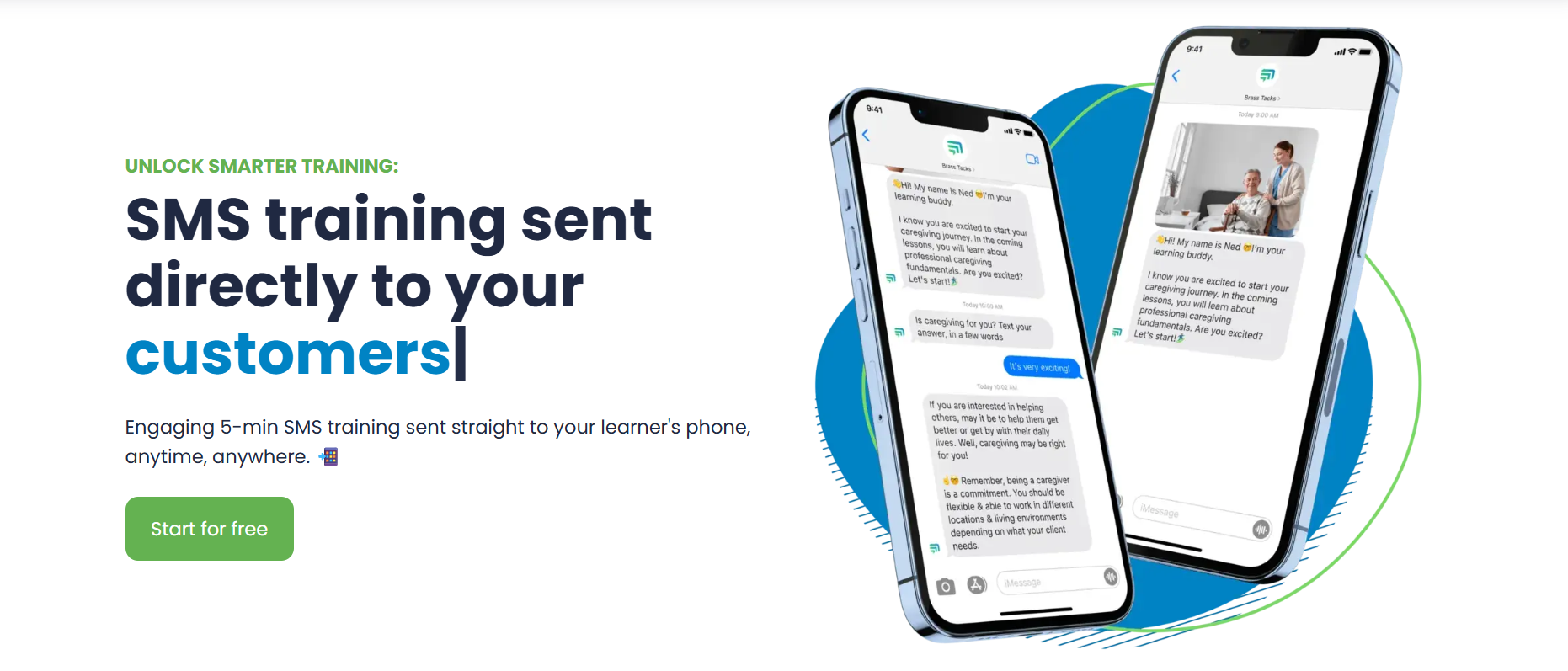
Brasstacks LMS is a premium microlearning platform built for modern employee training, customer education, and field teams that need fast, accessible learning without complex setups. Unlike traditional LMS platforms that require lengthy onboarding and login-based access, Brasstacks delivers training through SMS and text-based messages, making it ideal for teams who are on the move or working in environments where desktop and internet connectivity is limited.
The platform is designed for simplicity and speed. Learners can access training content without creating accounts or logging in, which removes friction and improves adoption rates. Courses are developed around bite-sized lessons that fit into short breaks, supporting microlearning strategies that align with how people actually learn in dynamic work environments.
For organizations focused on onboarding, compliance refreshers, product knowledge, or role-specific skills, this approach can significantly reduce training time while maintaining engagement. Brasstacks also supports AI-assisted course authoring, which helps training teams create content faster without needing heavy design or technical resources.
The platform includes analytics and reporting to track progress, completion rates, and learner performance, giving administrators clear visibility into how training initiatives are performing. With ready-made courses and templates, teams can launch training programs quickly rather than building everything from scratch.
Brasstacks is especially well-suited for organizations where mobile access is primary, and SMS remains a reliable communication channel. It works well for companies with distributed teams, remote workers, or frontline staff who need training that is accessible, quick, and easy to complete.

Docebo
Docebo is a cloud-based LMS built for enterprise and mid-market organizations that need a powerful platform for employee training, onboarding, sales enablement, customer education, and partner training. It is known for its strong analytics, AI-driven learning recommendations, and the ability to create branded mobile apps for learners.
The platform features an intuitive course builder, automation workflows, and support for multiple content types, including videos, documents, SCORM, and webinars. Docebo’s AI engine personalizes learning paths and recommends content based on user behavior, which can improve engagement and completion rates. Its analytics dashboard gives administrators detailed insights into learner progress, training effectiveness, and business impact.
Docebo is a strong choice for organizations that want a scalable, enterprise-ready LMS with advanced features and a modern user experience. It is particularly effective for companies running complex training programs across multiple departments or geographies.
Talent LMS
TalentLMS is a cloud-based platform designed for businesses that want a fast, easy-to-use LMS without the complexity of open-source systems. It is built for quick deployment and offers a simple course builder, automation tools, gamification, and certification management.
The platform supports SCORM and xAPI, making it compatible with existing content libraries. TalentLMS includes features like leaderboards, badges, and automated reminders to keep learners engaged. Its interface is straightforward for both admin and users, which reduces training time and improves adoption.
It is well-suited for small to mid-sized businesses that need to launch training programs quickly without heavy technical investment. It works well for onboarding, compliance training, and role-specific skill development.
Canvas LMS
Canvas LMS is one of the most popular LMS platforms for schools, colleges, and universities. It offers a modern interface, strong social learning features, and robust tools for assignments, grading, and communication between instructors and students.
It supports mobile learning through its app, integrates with many educational tools, and offers flexible deployment options including cloud and self-hosted setups. Its focus on collaboration, discussion boards, and real-time feedback makes it a strong choice for academic environments.
While Canvas is excellent for education, it may not be the best fit for organizations focused primarily on corporate training or customer education.
D2L Brightspace
D2L Brightspace is a cloud-based LMS designed for higher education, associations, government agencies, and enterprises. It emphasizes mobile-first design, accessibility, and data-driven learning experiences.
Its primary features include personalized learning paths, analytics dashboards, content templates, and strong support for accessibility standards. Its mobile app provides learners with easy access to courses and notifications, supporting engagement across devices.
Brightspace is a solid option for institutions that need a scalable, secure platform with strong compliance and accessibility features. It is particularly effective for large academic institutions and government organizations.
Blackboard Learn
Blackboard Learn is an established LMS used by many educational institutions worldwide. It offers tools for course management, assessments, communication, and content delivery, with a focus on supporting academic workflows.
The platform includes features like discussion boards, assignment submission, grading tools, and integration with third-party educational systems. Blackboard Learn is known for its reliability and support for large-scale academic environments.
While it is a strong choice for education, Blackboard Learn may feel less modern compared to newer cloud platforms and may require more technical setup for some organizations.
Tovuti LMS
Tovuti LMS is a cloud-based platform focused on employee training, onboarding, and engagement. It offers a built-in course authoring tool, gamification features like badges and leaderboards, virtual classrooms, and detailed reporting.
It is designed to be easy to set up and use, with prebuilt templates and content that help organizations launch training quickly. Its engagement tools make it a good fit for companies that want to keep learners motivated through interactive experiences.
Tovuti works well for corporate training programs that need a balance of features, ease of use, and learner engagement.
LearnWorlds
LearnWorlds is a cloud-based platform designed for training businesses, content creators, and organizations that want to create interactive, branded learning experiences. It offers advanced video tools, interactive content, and the ability to create custom-branded mobile apps for learners.
The platform focuses on high-quality course design with features for video editing, interactive quizzes, and customizable learning interfaces. It is well-suited for businesses that sell courses or need to deliver polished training experiences to customers and partners.
It is a strong option for organizations that prioritize content quality and branding over complex administrative features.
360Learning
360Learning is a cloud-based LMS built for collaborative course creation and multilingual training. It allows teams to co-author content, supports multiple languages, and offers mobile learning capabilities.
The platform is designed for distributed teams that need to create training together and deliver it across different regions. Its co-authoring features make it easier for organizations to scale content development without relying on a single team.
It is a good fit for multinational companies or organizations with diverse, distributed teams that need flexible, collaborative training solutions.
Google Classroom
Google Classroom is a simple, cloud-based learning tool integrated with Google Workspace. It offers assignment distribution, grading, notifications, and basic communication features, making it ideal for K-12 classrooms and basic course delivery.
The platform is easy to set up and use, with minimal configuration required. It works well for teachers who want a straightforward way to share materials and manage assignments without the complexity of a full LMS.
It is not a complete replacement for Moodle in all use cases, especially for corporate training or advanced learning programs, but it is a strong option for schools that need simplicity and integration with Google tools.
Moodle Alternatives by Organization Type

Moodle alternatives differ sharply in how they handle onboarding, reporting, content authoring, and their support model. A platform built for higher education may not be the best fit for corporate training, and a solution designed for enterprises might be too complex for small teams. Choosing the right alternative depends on your organization's type and the specific training goals you need to support.
For Corporate Training
For corporate training, the best Moodle alternatives prioritize fast onboarding, automation, clear reporting, and integration with business tools like HR systems or sales platforms. Platforms like Docebo, TalentLMS, Tovuti LMS, and Brasstacks LMS are strong choices because they offer features such as certification management, compliance tracking, sales enablement workflows, and microlearning delivery suited for busy employees.
These platforms are typically cloud-based, which reduces the technical burden on internal teams. They also include analytics that help leaders measure training impact on business outcomes such as retention, productivity, or sales performance.
For Higher Education
For higher education, Moodle alternatives need to support academic workflows like course assignments, grading, discussion boards, and collaboration between instructors and students. Canvas LMS, D2L Brightspace, and Blackboard Learn are built specifically for schools and universities with features like social learning, mobile access, and strong support for accessibility standards.
These platforms often offer both cloud and self-hosted options, giving institutions flexibility in how they manage their LMS. They also integrate with student information systems and other academic tools, which is critical for large educational organizations.
For Customer Education
For customer education programs, the focus shifts to branded learning experiences, interactive content, and the ability to deliver polished training to external users. Platforms like LearnWorlds, Docebo, and Tovuti LMS are well-suited for this use case because they support custom branding, video tools, and mobile app creation for learners.
These platforms often include features like certification programs, progress tracking for external users, and the ability to sell courses or offer training as part of a customer success strategy.
For Small Teams and SMBs
For small teams and SMBs, ease of setup and cost-effectiveness are the top priorities. Platforms like TalentLMS, Brasstacks LMS, and Google Classroom offer quick deployment, simple interfaces, and pricing models that work for small budgets.
These alternatives reduce the need for technical staff or long implementation timelines. They are ideal for organizations that need to launch onboarding, compliance, or role-specific training quickly without heavy investment in infrastructure or training for admins.
Why Businesses Switch from Moodle in 2026?
Many organizations start with Moodle because it is free, open-source, and widely supported. But over time, common pain points push teams to look for alternatives that reduce complexity and improve the learner experience.
One of the biggest challenges is open-source complexity. Moodle requires internal teams or external vendors to handle hosting, updates, security, and custom integrations. This can become costly and time-consuming, especially for organizations without dedicated technical resources.
Another frequent issue is the steep learning curve for admins and instructors. Moodle’s interface can feel overwhelming for new users, and building courses often requires more steps than modern cloud LMS platforms. This can slow down content creation and reduce adoption among trainers who prefer simpler tools.
Many teams also report that Moodle has an older-feeling interface compared to newer platforms. While Moodle has added features over the years, its look and navigation can feel less polished than those of cloud-based alternatives that prioritize modern design, mobile-first experiences, and intuitive user flows.
Support limitations are another concern. Since Moodle is open-source, official support is community-driven, and organizations often rely on third-party vendors for help. This can lead to slower response times or inconsistencies.
Support limitations are another concern. Since Moodle is open-source, official support is community-driven, and organizations often rely on third-party vendors for help. This can lead to slower response times or inconsistent quality compared to managed LMS platforms that offer dedicated customer support.
Finally, reporting and analytics in Moodle can be limited or require additional plugins to get the insights businesses need. Companies that want clear visibility into training effectiveness, completion rates, or learner performance often move to platforms with built-in advanced analytics dashboards.
These factors make managed LMS alternatives like Brasstacks LMS, Docebo, and TalentLMS more practical for organizations that want faster setup, better support, and a modern learner experience without the technical overhead of self-hosted systems.
Why is Brasstacks LMS the best Moodle Alternative in 2026?

Brasstacks LMS addresses many of the pain points that drive organizations away from Moodle by offering a modern, cloud-based alternative built specifically for employee training, customer education, and mobile-first teams. Instead of requiring complex hosting, technical maintenance, or login-based access, Brasstacks delivers training through SMS and text-based microlearning, making it accessible for learners wherever they are.
For organizations frustrated with Moodle’s steep learning curve, Brasstacks provides a simpler interface with AI-assisted course authoring, ready-made templates, and bite-sized lessons that training teams can launch quickly. This reduces the time needed to build content and helps teams focus on outcomes rather than technical setup.
Brasstacks also solves the support and maintenance challenge by being a fully managed SaaS platform. There is no need to worry about hosting, updates, or security; everything is handled by the LMS vendor. This gives training leaders peace of mind and frees up internal resources for strategy and content development.
It has built-in dashboards that track progress, completion rates, and learner performance. Administrators get clear visibility into how training initiatives are performing without needing to install additional plugins or configure complex reporting tools.
The platform is especially well-suited for organizations where mobile access is primary, and SMS remains an important communication method. For companies with remote teams, distributed workforces, or frontline staff who need training that is quick, accessible, and easy to complete, Brasstacks offers a practical alternative to traditional LMS setups.
If you are looking for a Moodle alternative that prioritizes microlearning, ease of use, and mobile delivery, Brasstacks LMS is designed to meet those needs without the technical complexity of open-source systems.
Frequently Asked Questions
What is the best Moodle alternative in 2026?
The best Moodle alternative depends on your use case. For corporate training and microlearning, Brasstacks LMS and Docebo are top choices. For higher education, we’d recommend Canvas LMS and D2L Brightspace.
What is the best Moodle Alternative for corporate training?
The best Moodle alternatives to Moodle for corporate training is Brasstacks LMS, TalentLMS, and 360Learning. They offer features like AI-assisted course creation, automation, certifications, analytics, and microlearning built for employee onboarding, sales training, and compliance.
What is the easiest Moodle alternative to use?
TalentLMS, Brasstacks LMS, and Google Classroom are the easiest Moodle alternatives to use. They have intuitive interfaces, quick setup, built-in course libraries, and minimal technical requirements compared to Moodle’s open-source complexity.
What Moodle alternative is best for microlearning?
Brasstacks LMS is the best Moodle alternative for microlearning, especially for SMS-based no-login training. Other strong microlearning platforms include Docebo, Calibr, and Absorb LMS, which offer bite-sized lessons, mobile-first design, and AI-driven personalization.
Is there a free Moodle alternative for schools?
Yes, Google Classroom is a free Moodle alternative for K-12 schools and small teams already using Google Workspace. Canvas LMS also offers a free open-source version for institutions that want plug-and-play features without technical overhead.
What is the best Moodle alternative for higher education?
Canvas LMS is the best Moodle alternative for higher education, offering polished, open-source plug-and-play features, mobile apps, and seamless integrations. D2L Brightspace, Blackboard Learn and CYPHER Learning are also strong choices for universities needing personalized learning and AI–powered course creation.
Why should I switch from Moodle to a Cloud LMS?
Switching from Moodle to a cloud LMS like Brasstacks, Docebo, or TalentLMS gives you faster setup, no hosting or maintenance work, dedicated support, modern UI, and built-in analytics. Cloud platforms reduce technical overhead and improve learner adoption compared to Moodle’s self-hosted challenges.
People Also Read:
- 5 Best Sales Enablement LMS
- What is a Learning Management System?
- 10 Best LMS for Compliance Training
- 7 Best LMS for Sales Training
- 12 Best LMS for Employee Training
- 8 Best eLearning Authoring Tools
Conclusion
Selecting the right Moodle alternative in 2026 depends on your organization’s specific needs, training goals, and technical resources. Whether you are looking for a platform built for corporate training, higher education, customer education, or microlearning, the platforms in this guide offer a wide range of options to match your organizational requirements.
For organizations frustrated with Moodle’s open-source complexity, steep learning curve, and older interface, cloud-based alternatives like Brasstacks LMS, Docebo, TalentLMS, and Tovuti LMS provide faster setup, better support, modern user experiences, and built-in analytics without the technical overhead. Brasstacks LMS stands out for teams that need SMS-based microlearning and no-login delivery, making it ideal for mobile-first employees, frontline workers, and organizations in regions where SMS remains a primary training channel.
If you are in higher education, Canvas LMS, D2L Brightspace, and Blackboard Learn are strong alternatives with academic workflows, social learning features, and accessibility support. For customer education programs, LearnWorlds and Docebo deliver branded experiences and interactive content tools. Moreover, for small businesses, TalentLMS, Brasstacks LMS, and Google Classroom offer simplicity and cost-effective pricing models.
The key is to evaluate platforms based on ease of use, deployment model, support quality, reporting capabilities, content authoring tools, mobile access, and how well they align with your training strategy. Don’t select based on popularity; you must choose based on what works for your learners and your business.
Ready to see how Brasstacks LMS can transform your employee training? Request a demo today to explore SMS-based microlearning, AI-assisted course authoring, and no-login delivery designed for modern teams. Visit Brasstacks LMS or contact our team to get started.